Last December’s contest over what theme would get discussed in the fifth Wednesday post, as I’ve noted here more than once already, was unusually lively even by the standards of my lively and eccentric commentariat. What’s more, all three of the leading contenders were themes I wanted to write about anyway. Long before the contest wound up, I’d already decided that I was going to write about all three of them. The first and second place winners, cognitive collapse and the uses of downward mobility as a ticket to freedom, have already had their posts.
This time, accordingly, we’re going to talk about the third place winner, the best and worst aspects of New Thought, that most irredeemably American of spiritual movements, which has been both a significant influence on my own work and a repeated theme of my critiques online and off. “Best and worst” is a good way to approach New Thought teachings, because it has plenty of both. Done right, it can transform your life for the better; done wrong, it can plunge you straight into failure, madness, and death. If that dichotomy catches your interest, climb in and hang on tight. It’s going to be a wild ride.
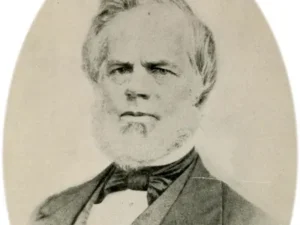
The New Thought movement had its source in the writings of a remarkable New England thinker, Phineas Parkhurst Quimby. Born in 1802, one of seven children of a New Hampshire blacksmith, Quimby grew up dirt poor but rose to comfortable circumstances through hard work and his considerable talents as a watchmaker and inventor. In 1836, a traveling Mesmerist from France named Charles Poyen came to the town where Quimby lived and gave a public exhibition of Mesmer’s methods. Quimby was fascinated, and turned the same ingenuity that earned him several lucrative patents toward the powers of the mind. He became a student of Poyen and followed him around New England, learning Mesmerism as he went.
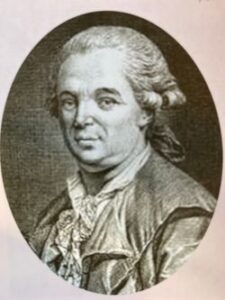
Mesmerism was itself in the middle of a transformation just then. When Franz Anton Mesmer invented it in the late 18th century, it was a system of energy healing not that different from reiki. The difficulty, of course, is that the Western world from the 1650s on has had a serious allergy to the concept of a life force, which is central not only to Mesmerism but to a galaxy of other healing modalities as well. The great challenge of the time was finding a way to erase the life force from Mesmerism, and that’s how it got turned into hypnotism, the name under which the surviving scraps of Mesmer’s system are known today.
The quest for respectability that drove Mesmerists to refocus from subtle energies to mental suggestion also affected Quimby. After a decade or so practicing the Mesmerism he learned from Poyen, he became convinced that the real source of power in the system was the belief and the attitudes of the patient. He came to believe, in fact, that illness was purely a mental phenomenon, that it existed only because the person suffering from it believed that it existed, and that if he could convince them otherwise, it would go away.
In a significant number of cases, what’s more, he wasn’t wrong. Keep in mind that he went into practice as a healer in Puritan New England during the height of the Victorian era, and most of his patients were middle-class women. The social customs of that time consigned women of that class to a life of decorative uselessness. Excluded from the trades and professions and more often than not denied any but the most basic education, they were also shut out of active involvement in household labor and childcare because of their class—the mark of a respectable family in those days, after all, was that servants did all the real work. Unless they happened to be raised in a family that gave them an adequate education, and turned out to have some talent for one of the very few careers, such as writing, that women were allowed to take up, they faced a life of paralyzing boredom and clinical depression. It’s not surprising that so many of them turned into chronic invalids constantly fussing about their symptoms. It was one of the very few ways available to them to break the intolerable tedium of their lives.
Then came Quimby. With his frank New England manner and his unshakeable self-confidence, he simply sat his patients down, explained to them that their health problems existed entirely in their own minds, and convinced them that they could do something more useful with their lives than languish in bed and complain about their symptoms. His timing was excellent, for he entered into practice as a healer just as women’s organizations for charitable, religious, and (in certain limited cases) political purposes were becoming acceptable options for respectable women. In case after case, women who were considered hopeless invalids before he treated them got up wholly cured, and proceeded to find something more interesting to do with their lives.
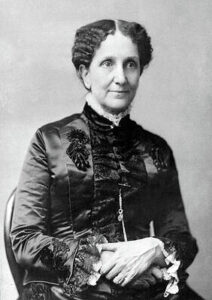
One of his patients was a woman named Mary Baker Eddy. She took to the world of religious activities with more verve than most, turned Quimby’s ideas into a theology, and founded the Christian Science movement. Jealous of her role as queen bee of the “mind cure,” she did her level best to deny her dependence on Quimby’s thought, and also developed the habit of expelling successful Christian Science practitioners who might become potential rivals. These promptly founded organizations of their own, and the New Thought movement was born.
A profound ambiguity ran straight through the heart of the new movement, however. Central to New Thought ideology from Quinby’s time on was the belief that every illness, and every other kind of negative life experience without exception, was just as amenable to mental treatment as the psychosomatic ailments of bored and frustated New England housewives. The movement spread so fast and accomplished so much because, in fact, a great many illnesses and a great many negative life experiences can be treated very effectively that way. Time and again, though, the movement and its practitioners kept running up against the awkward discovery that what worked for so many things did not necessarily work for everything.
The reaction to this unwelcome discovery led to a division in the movement—never formal, never total, and very often bridged by teachers and schools who took up positions somewhere in the broad middle ground, but still significant. We can call the two ends of the spectrum thus traced out the pragmatic and the psychotic wings of the movement. On the pragmatic wing, you had those New Thought teachers who recognized that beliefs and attitudes were powerful tools but couldn’t always do the job by themselves. These teachers and the schools they founded taught that proper attitude combined with hard work and a realistic assessment of the situation could work wonders, and far more often than not, they were right.
The teachers and schools of the psychotic wing rejected all this, and doubled down on Quimby’s original postulates. As far as they were concerned, the universe each person inhabited really was a product of that person’s thinking, and could be transformed at will by changes in belief and attitude. The one thing that could prevent this, according to these teachers and schools, was doubt. Absolute faith in the power of the mind was the one non-negotiable requirement of their system. That was where the trap snapped shut on them, of course, because that demand for blind faith made it impossible for them to check their beliefs against experience.
Regular readers already know how that played out, because I discussed it in a post in December of last year. Once you turn your back on reality testing, as I pointed out then, you tumble straight into a close equivalent of the “model collapse” that afflicts generative large language models, the programs miscalled “artificial intelligence” in today’s media. Cognitive collapse, as I labeled the resulting syndrome, causes the mind to drift steadily further from experienced reality into a self-referential world of delusions. This is one of the things that the psychotic end of New Thought methods quite often causes.
The divergence between the pragmatic and psychotic wings of the movement has another dimension, which will inevitably raise hackles in some readers. One of the reasons that Quimby’s methods were so successful in his own time, and did so much good for so many of the people he treated, was that he drew so many of his patients from a disadvantaged group. If you have been taught all your life that you can do nothing, and then encounter a grave and earnest healer who tells you that you can do anything, the most common result is that you will settle somewhere between those two, convince yourself that there are things you can do, and go out and do them. This tends to be very productive.
This tendency to move toward the middle also accounts for the remarkable spread and success of New Thought methods, as well as certain varieties of folk magic such as hoodoo, in African-American communities in the first half of the twentieth century. Once again, a disadvantaged group that had been told over and over again that it could accomplish nothing encountered a set of beliefs that claimed that those who followed certain teachings could do anything. In response, they split the difference and accomplished a lot.

Matters were far different when the same techniques came to the attention of privileged groups. If you grow up being taught that you can have whatever you want, and you then encounter an ideology that tells you that you can get the universe to give you whatever you want if you only have the right beliefs and attitudes, you will likely find that ideology very attractive. Instead of allowing them to find a middle ground that will encourage productive effort, though, the spread of New Thought among the privileged convinced a great many of them that they deserved whatever they wanted and inflated their already oversized sense of entitlement to dizzying levels, with highly unproductive and sometimes disastrous results.
(To head off certain common misunderstandings here, I should probably say in so many words that “disadvantaged” here does not mean “belonging to a group of people that was oppressed a long time ago,” and “privileged” does not mean “assigned to a category it’s currently fashionable to hate.” If your employer pays a significant fraction of your health care costs and you have a retirement plan other than getting Social Security and working until you die, you belong to the privileged classes of American society, no matter what did or didn’t happen to your ancestors. That a good many of the female descendants of those chronically ill New England women are now well up in the ranks of American privilege is just one of history’s many ironies.)
Thus your position in the class pyramid, to a remarkable degree, determines what philosophy it’s wise of you to adopt. For the privileged, something close to classic Stoicism is a wiser choice; the Stoic focus on noticing what you actually control and what you don’t makes a good antidote to the inflated sense of entitlement that so often disfigures the thoughts and actions of the upper classes. For those a good deal further down the social ladder, by contrast, New Thought is a great idea, as it helps them shed the attitudes that keep them from taking charge of their lives and doing something constructive and positive.

Mind you, in most cases people are drawn to philosophies that reinforce their biases, not those that draw them toward balance. This yields another useful litmus test for New Thought: the more it appeals to you, by and large, the less you will benefit from it. If you find the whole idea of changing your life by changing your attitudes silly, or annoying, or self-evidently naïve, give it a try—you’ll likely get a lot of benefit from it. On the other hand, if it seems obvious to you that you deserve whatever you want and that the universe is obliged to give you goodies, stay away from New Thought. It will mess you over.
Those of my readers who have picked up the useful habit of challenging binary divisions will doubtless be clearing their throats by this point and wondering when I’ll mention the third factor that resolves the binary just sketched out into a balanced ternary. (If this is you, congratulations; you’ve been paying attention.) The way from the binary to the ternary in this case can be found by challenging the underlying principle of the New Thought movement, which has been summed up most memorably in the sentence “You create your own reality.”
That isn’t entirely a lie. Instead, like most really problematic ideas, it’s a half-truth. It’s true often enough to convince people that it’s true all the time, and that’s where the worm slips in and leaves the apple rotting outwards from the core. To transform this half-truth to a truth takes only two letters and a bit of punctuation.

You don’t create your own reality, you see; you co-create your own reality. You make an important contribution to the making of your own reality, but there’s this teeny, tiny other thing called the rest of the universe that also has something to say about the matter. How much you contribute to the creation of any particular reality you experience, and how much the universe puts into the mix, varies from one kind of experience to another, but both are always involved.
The concept of co-creation as the principle through which experiences manifest to each of us has a lot to offer all by itself, and I recommend it heartily as a theme for meditation to those of my readers who have taken up a daily meditation practice. To build on that principle, though, I’d like to propose three laws of co-creation which can be tested out in practice.
The first law is this: the closer something is to you, the more you contribute to its co-creation. Your self-image, for example, is very close to you. The attitudes of other people are much further away. You will therefore find it easier to get good results by changing the former than by trying to change the latter. This is reliable enough that I’ve sometimes wondered if an inverse-square law, like the one that governs the effect of electromagnetic radiation, governs co-creative processes.
The second law is this: your actions have as much effect as your attitudes in co-creation. It won’t do you much good to try to make yourself happy by changing your attitudes if you keep on acting in ways that make you miserable. Thus you will get the best results by making sure that your actions and your attitudes align with each other, and with your intended goal. This requires reflection, self-knowledge, and a thoughtfully critical attitude toward your own behavior; awkward as these can be, they will take you a great deal of the way toward happiness and success all by themselves.
The third law is this: co-creation on any plane requires constructive action on that plane. If you want to become prosperous, you can’t do it just by cultivating thoughts or feelings related to prosperity. Prosperity functions on the material plane, and if you want to manifest prosperity, you have to take constructive actioon on the material plane: for example, by reining in your less productive expenditures and finding ways to earn more money. If you want contentment, on the other hand, that’s an emotional state; you can’t achieve contentment by piling up material goods, only by taking action on the emotional plane to become contented with what you have. The same distinction applies to every goal without exception: find the plane on which it exists and act there if you want to succeed.

I quite understand that all of this may be highly dispiriting to those who think they ought to be able to get what they want without working for it, or who are sure that it’s reasonable for them to keep on doing the same things while expecting different results. Nonetheless the universe is what it is, it does what it does, and expecting it to cater to an overdeveloped sense of entitlement is never a good strategy. Learning how to work with it is a much better idea.
One more thing. In this essay I’ve put some needed emphasis on the downsides of New Thought methods. The fact remains that for many people, a good solid dose of the pragmatic side of New Thought can be enormously healing and empowering. It certainly was for me. The specific set of teachings I used to shake up my own attitudes and get me moving toward a more satisfactory life was a correspondence course taught by a Florida businessman turned mystic, Burks Hamner, under the title of The Order of the Essenes. Those lessons can be downloaded free of charge here; the first course, consisting of 23 weekly lessons, is the one I found most useful.
I might very well print off a hard copy of this post and use it for a deeper study. I think it will nicely supplement my Mayan Order lessons. I am also reminded of dependent co-arising within Buddhist thought. I’ve realized as of late I’ve been adopting a basically Buddhist metaphysics without the same world-hating soteriological goal. This might be one more piece of the puzzle for me.
I am also reminded, yet again, of Peter Anspach’s Evil Overlord List: “Rule 22. No matter how tempted I am with the prospect of unlimited power, I will not consume any energy field bigger than my head.”
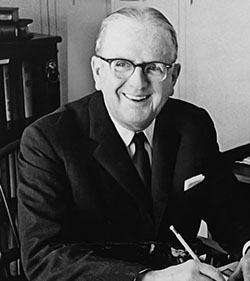
This was a really interesting read because for some years I was myself ensnared by this self-help nonsense. It took a while for me to understand that these people — Napoleon Hill, Norman Vincent Peale, Maxwell Maltz, David Schwartz, and myriad others — were scammers and conmen.
The best self-help advice I got was from Robert Ringer’s book, “Winning through Intimidation”, where he described how he used to stand in from of a mirror each morning and pump himself full of positive thoughts. The rest of the day he would get the s**t kicked out of him. After six months he realised something was wrong with this kind of positive thinking and also realised that he had to take into account the external world, which had its own rules independent of his desires and fantasies.
I’m an amateur chess player — a rated one, and occasionally playing in tournaments. The first step to getting past beginner level is to understand that what you are trying to do on the board has to blend with what you think your opponent is up to. You have constantly to take defensive and prophylactic measures, interspersed with your own attempts to force your will on the board. Your opponent is the inconvenient external reality.
For a fine expose of Rhonda Byrne’s “The Secret” I can do no better than recommend the following essay:
https://markmanson.net/the-secret
JMG,
My wife and I have what is very close to a perfect marriage ( Knock on wood). But the only real fundamental conflict we have is on the brain or attitudes effect on sickness or health. She had a mother who was something of a hypochondriac. Worries about all illness, medicine needed for everything, hoarded remedies etc. My wife is not this way, but she also does not believe in my attitude that a great part of being sick is mental attitude. I was raised to believe that sickness was for the weak of mind, and those that were trying to get out of work.
Gradually over time our attitudes have come closer together. I accept that certain types of Illness are only slightly improved by mental attitude and she has accepted that many types of illness’s can be improved with a positive mental attitude. We are still not together on this, but we get closer all the time.
I can also vouch for the Order of Essenes material, and the pragmatic side of New Thought in general, which has helped me greatly. The difference in my self-talk a decade ago and now is like living with an entirely different person.
For those downloading the lessons, I’d also like to offer this link, where you can either download the zip file of every lesson as an individual PDF, or have them handily combined into a single PDF for each course. https://octagonsociety.org/archives/order-of-the-essenes/
I’m very happy with this essay. It clarifies some conclusions I had already reached and helps me connect those conclusions with a more systematic outlook. (As a Sagittarius, this is my natural way of approaching whatever I’m trying to figure out.)
Your three laws of co-creation are an elegant formulation. I’ll share this post as it applies to magical ritual in a group I lead.
Deborah Bender
There are sadly many things wrong with the New Thought movement. Mitch Horowitz, a New Thought author who would fall into the middle ground between the two camps, has pointed out that the movement is actively hostile to any attempt to investigate its ideas intellectually even to refine and improve them, and as a result nearly every new book on manifestation is just a rehash of every other, with ideas already stated, and stated better, a century ago.
For myself, my biggest complaint is the way the movement has debased the term “spiritual” to mean little more than “getting goodies.” Not only the intellectual but the mystical side of New Thought has been almost totally left to atrophy. Which is a shame because New Thought of course not only arose from Christianity but some schools have a lot in common philosophically with Advaita Vedanta, Kashmir Shaivism, Yogacara Buddhism, and similar traditions.
P.S. Speaking of Mitch Horowitz, he’s an interesting character in his own right. He’s a theistic Satanist who also makes offerings to the ancient Greek gods, speaks about capital-g God positively, and prays every day at 3 pm Eastern specifically so his readers can join him in a Catholic-style “hour of prayer.”
His con — as you’ve pointed out before, there’s always a con with Satanists — seems to be that he made a hasty vow to God a long time and is now trying to rules-lawyer his way out of it.
It’s interesting that you mention people adopting philosophies that match up with their preconceived notions and stoicism in the same essay. For me stoicism along with the Bhagavad Gita did me an immense amount of good in reducing my worries and overall cognitive load. So imagine my shock when I see a recommended video saying that people misunderstand stoicism. (I think it had a more click-baity title before. Something about it being a loser ideology or something. Not sure.) Anyway, the thesis of the video was that some people were using the philosophy to valourize their already inert life. A lot of people nowadays are living a very Victorian life, living as much of as they can from the confines of their bedrooms. I think some people have come to call it “rot-maxxing.” I guess if you’ve had a tough go at life, a philosopher talking about the capriciousness of the average person would be congenial. Just a damn shame that they didn’t use this philosophy to engage more with life, not less…
By remarkable coincidence I think Jonathan Haidt may have just pointed out the next logical candidate population for another round of New Thought.
In a long article replete with graphs, he argues that “Gen Z as a whole… developed a more external locus of control [i. e., a belief that they are helpless in the grip of forces beyond their control and have virtually no agency in their own lives] gradually, beginning in the 1990s.” He attributes this change to “the loss of ‘play-based childhood’ which happened in the 1990s when American parents (and British, and Canadian) stopped letting their children out to play and explore, unsupervised. (See Frank Furedi’s important book Paranoid Parenting.) I believe that the loss of free play and self-supervised risk-taking blocked the development of a healthy, normal, internal locus of control.”
So if anyone is looking at the L. Ron Hubbard path to wealth (“If you want to get rich, you start a religion.”) you now have the the teachings and the target audience. All you need to do is update the language and develop a charismatic public speaking style.
Brenainn, those rules for evil overlords are surprisingly useful in practice!
AA, granted, but for those people who have never learned to exercise their will on the world, the pragmatic end of New Thought can be genuinely helpful. So, for that matter, can chess — you have to pay attention to what the other player is doing, but you also have to learn to pursue your own strategy.
Clay, and somewhere in the middle is the truth of things. I’ve used a lot of psychosomatic medicine on myself, and gotten a fairly good sense of where it works and where it doesn’t; I can overcome a lot of illnesses using mind power, but not all!
Kyle, thanks for this! I keep forgetting that the OSA has those convenient links.
Deborah, by all means circulate it as you wish.
Slithy, you’ll very rarely find me agreeing with Horowitz on anything, but he’s quite correct here. The abandonment of the mental and spiritual dimensions of New Thought is one of the most heartbreaking things about its history.
Sean-Luc, it’s very much a case of “one man’s meat is another man’s poison” — or in this case, one person’s wisdom is another’s clueless idiocy. It’s sometimes a source of amusement to me that I go through periods where Stoicism helps me a great deal — usually in the wake of grief and pain — and other periods in which the pragmatic end of New Thought is just what I need.
Joan, maybe, but it would take somebody with Quimby’s self-assurance and strong-mindedness to pull it off. My guess is you’re going to see a huge number of Gen Z types making a beeline instead for traditional churches, where they can rest the locus of control in the Christian god.
Joan #9
I concur with your assessment. The article by Haidt speaks to a sense of self that I find in my own friends. I’ve noticed that my friends, even the ones who are especially intelligent, do not demonstrate an internal locus of control.
I do not need to look further than my friend who chronically turns down my advice to quit his unhappy job to find their own work. He is obsessed with the idea that corporate liberalism rules his world he cannot recognize the potential he has to start his own business. Every time I tell him to quit and start his business he says something along the lines lines of “AI is just going to take all of those jobs” and dismisses any chance that he could make his own way in the world.
Even among my especially smart friends, I find that many beliefs are they hold of the world require an external locus of control; they are handcuffed to belief systems that keep them in mental chains. Everyone is so concerned with looking up at the problems of the world that they are unable to look around and discover what they are capable of in their life.
Thank you for this! There is a lot of meat here, and I especially like the 3 laws. 🙂
There was a session one time, in my clinic, when I was more or less pole-axed by a patient’s declaration that every single bit of their experience was reality THEY were creating with their mind…
I was like… “hmm, you mean me, too? Like, you picture me as switching ON when you ‘create” me, and OFF when you’re finished with me?” I think the word “co-creation” might have added a wee something to that particular conversation… 😉
I was actually reminded of the scene in your novel “The Nyogtha Variation,” where June Satterlee said the message of “The King in Yellow” – that the universe neither knows nor cares what you think about it – had the same effect: some people went insane, while others turned their lives around and went out and did greater things with it.
JMG, Thank you, your three laws of co-creation are helpful!
The place where New Thought could help right now is empowering people to trust themselves. Earnest Holmes kind of talks about this but the philosophy of trusting your own wisdom never seems to get operationalized.
Instead of saying “That sickness is all in your head,” or “You are only poor because you are think you are poor,” New Thought could say, “within you, you know where to go, what to do, and how to heal.”
Sickness is the perfect place to use the skill of trusting yourself. Our bodies talk to us all the time, just not in words. If we listen, we can know what is wrong and get clues about how to fix it. We can say prayers to ask for help if help is needed.
Instead, if we listen to the culture, we completely ignore our own wisdom and go find someone in a white coat to tell us what they think is wrong, which they will, always coming up with what is most profitable for them. Trusting yourself is a skill that takes practice. It can keep you healthy and help you heal, but it is hard to do, especially when you are in pain and afraid. It can help with death too, when that time comes.
Missing the opportunity to teach people to trust their own wisdom is such a loss! Instead, we got caught up in Think and Grow Rich.
I will take a look at the Order of Essenes. Thanks again.
P.S. Thanks for this post. I need a reminder, both ways, from time to time.
And – just picked off the flash news bites, “Gen Z men drive unexpected faith revival
New research suggests a surprising revival of Christian faith is underway, led by Gen Z men and members of the educated upper middle class. The findings, supported by multiple datasets, challenge long-held assumptions that religiosity is declining uniformly across demographics. Experts say this shift could reshape both cultural and political landscapes in the coming years.”
I am working on cocreating a reality where I will have a bigger harvest than last year. Last year was a bit of a disaster: I didn’t put as much effort in because I was absent in the middle of spring, and rabbits and rats were a worse plague than they’ve ever been before, and then I got discouraged after even my potatoes got dug up and eaten.
So I’m getting stuff started early via winter sowing (which does offer some predator protection when they’re very small), sprouting seeds, harvesting the odds and ends that did survive and are still out there, and prepping for the garden this year. I have bird netting I intend to use to discourage critters (no, it won’t keep out determined mammals, but it can discourage casual nibbles) – I haven’t seen rat or rabbit but something left a pile of round poop in the middle of the lawn.
What actually happens will depend on the interplay between me and the critters.
This a decent example of how cocreation plays out in practice?
When cocreating, where does God/the Divine fit in this rubric? I assume out there as part of the universe, a part that can hinder or help as they see fit, and according to your relationship with them.
PS – the more I think about it the more I like the concept of “splitting the difference.”
Even though I think of myself as more of a technician than an advisor – it still happens that specific people sitting in my clinic seem to “call” certain conversations and shared contemplations into being. And, tolerably often, I am drawn to share some version of the Stoic-inspired Serentiy Prayer – “God grant me the power to CHANGE what I CAN change, the serenity to ACCEPT what I CANNOT change, and the wisdom to know the difference.”
But there are times when the shared contemplation that wants to happen is the quite different idea of letting the imagination play in the playground of a “what if” that is positive – to see it, taste it, smell it, live with it… while not letting other people decide what kinds of “let’s pretend” games will get played there, and not letting one’s natural worry and fear play out all the negative “what if’s” in that playground, because those will be all that your body hears about.
So, this post helps me see that these different “shared contemplations” are called out in different scenarios, and when I think back, it is certainly the case that specific people that “split the difference” using the one, or the other, may well obtain some benefit, as it suits.
In light of your remarks about Stoicism vs. New Thought and Sean-Luc’s comment about people abusing Stoicism to justify “rotmaxxing,” I think we can say that Stoicism, too, has two branches, a pragmatic branch and a schizoid branch. The pragmatic branch, perhaps best exemplified by Seneca in his Moral Letters to Lucilius (aka Letters from a Stoic), is active, engaged, and vibrant. The schizoid branch is exemplified by the rotmaxxers but also some of the ancient Stoics who reportedly became extreme fatalists or even committed suicide just to prove they didn’t mind dying.
A bit of Stoicism on the one hand, leavened by a bit of New Thought on the other seems to be a good mix in ye olde cauldron. Burks Hamner and Emmet Fox have been the best for me so far in the New Thought world. I also quite like the book “A New Pair of Glasses” by Chuck C. and the various talks he gave. Those were very helpful to me. Perhaps New Thought leavened by a bit of Carl Jung would be good.
I read some New Age books in my late teens and early twenties and the stuff kind of blew up on me in unhelpful ways. I can’t think of how specifically, but I didn’t “get what I wanted” until I just kept putting my butt in the chair among other actions. I’m thinking here of Psycho-Cybernetics by Maxwell Maltz…but there were lots of books I looked through at the library trying to find a system… in the end, I was always drawn back to magic and the occult. Can’t seem to get away from magic and the occult once you start… even if you think you are as I learned. But the Hamner & Fox stuff really helped me when I was trying to straighten some things out in my life. And so did the Stoics, especially Epictetus.
A good intro to some Stoic thinking for me was this book “A Guide to the Good Life: The Ancient Art of Stoic Joy” by William B. Irvine. (Some shale just ain’t in my control!)
I saw an announcement on Rhyd Wildermuth’s subSlack yesterday that he is getting training as a life coach in a Jungian modality. I wish him well and I think “life coaches” in that vein may be very good. Learning some of those Jungian techniques and background, and being able to use them to help others with a kind of lay persons certification strikes me as very good thing on the staircase down ahead.
I always scoffed at the life coaches in the New Age circuit. Seemed just another way to “create their own reality” while fleecing people (likely well off suburbanites) looking for direction. But people have always needed guidance from elders and the like, and their aren’t many around these days who are worth going to for guidance. A work-around with regards to therapy and legal ways to help people seems a good idea, especially for those in the alternative spirituality scene.
I guess that’s it for now.
For those interested in the theme of “Bioregional Microcultures & The Age of Aquarius” and Uranian Vibrations, I uploaded this article which originally appeared in New Maps to my website: https://www.sothismedias.com/home/bioregional-microcultures-the-age-of-aquarius
It also appears on my subSlack mirror site:
https://justinpatrickmoore.substack.com/p/bioregional-microcultures-and-the
“When Franz Anton Mesmer invented it in the late 18th century, it was a system of energy healing not that different from reiki. The difficulty, of course, is that the Western world from the 1650s on has had a serious allergy to the concept of a life force”
I do suspect that in centuries to come this will change. It was be like people arrogantly talking about folks in the past “How did they NOT know about radio waves and germ theory”. It will probably be the same “How did (most) people of the 21st cebtury not know about life force, it was right there in front of them!”
I wish I could show this essay to myself just out of college, jobless and panicked, mistakenly thinking hard work was all for naught and I just needed the right “mindset.” I lost a lot of time and money to the psychotic side of New Thought. Looking back, though, any of the writers I followed who actually accomplished something and changed their lives put a great deal of work into their undertakings – they just seemed to be less burdened by fear. Nothing fell out of the sky, if anything, persistent action greased the wheels of synchronicity. I don’t think I realized back then that I did need keep working hard, but on things that actually matter to me personally – separate from compulsory exercises, going through the motions, trying to make the grown-ups happy…
Thank you for another illuminating essay!
Stoicism and New Thought are complimentary to each other: Stoicism to identify the limits and boundaries of one’s area of influence and then New Thought to act effectively within one’s area of influence.
Scotlyn, you’re welcome. Yeah, that’s a good example of the psychotic wing. I hope your patient didn’t take that kind of thinking to its logical extreme.
Patricia M, that scene and the argument behind it was based on an experience I went through when I was twenty, and it really sank in that the universe isn’t watching and doesn’t care. I found that profoundly freeing, but when I tried to talk about it, most people were horrified at the thought — “What do you mean I’m not creation’s precious darling?” was the somewhat sour way I thought about their reaction. My experience, which finally found its proper formulation with the help of H.P. Lovecraft and some tentacled horrors from the dawn of time, is in some ways the absolute opposite of the insight at the heart of the New Thought movement. I suspect that’s one of the reasons New Thought works well for me; the creative tension between “the universe doesn’t notice that you exist, and wouldn’t care if it did notice” and “the universe will become whatever your state of awareness tells it to be” puts me into that constructive middle ground.
Jean, learning to trust yourself can be very powerful, but here again, there’s a middle ground. I’ve known people who died because they trusted what they thought was their own wisdom, in the face of repeated confrontations with the evidence of their senses and the advice of others.
Patricia M, yep! The Second Religiosity is hitting its stride.
Pygmycory, that works, yes. As for God, I gave the non-theistic version of the formula of co-creation. You could as well say that you are one participant in the project of co-creating your reality, and God is the other participant.
Scotlyn, I’m delighted to hear this. It’s precisely the ability to respond to the other person, or the universe, with strategies that speak to the specific needs of the situation that differentiates the healer from the hack.
Slithy, exactly! Stoicism can also fall victim to cognitive collapse. Where New Thought gone wrong lands you in megalomania, Stoicism lands you in catatonia — two ends of the schizophrenic continuum.
Justin, Stoicism plus New Thought plus a lot of practical occultism certainly worked for me!
Michael, oh, I hope so. There’s a vast amount of completely pointless suffering and stupidity inflicted on people in Western societies as a result of our culture’s repression of the life force.
Andy, well, here’s hoping that this gets to people who are in the situation you were in.
Anon, nicely summarized.
Hello JMG and commentariat:
To be frank with you, John, I had read somewhere in your blog comments about a thing named “New Thought”, but I had no idea what it really was. After reading your current post, I’ve known another interesting theory (and practice). It’s been also interesting for me the New Thought origin was in Mesmerism, a nowadays near forgotten theory and practice, whose last remnants today are the hypnotism (like you’ve written in your current essay); which indeed it’s Mesmerism leaving out its politically incorrect mystic/occultist face (making it more respectable for materialistic orthodoxia in our current era).
Finally, I take note of your warning about New Thought as a system to achieve high goals in life (in its best cases), but a system which can ruin your life (in its worst cases, literally).
John, So glad you wrote this essay! It provokes some important questions from me:
(1) Might you write more about Stoicism in practice? Promoting it as the next step up from New Thought makes sense…and it has long been as a next step for me. But I’m not aware of a trusted course of introduction?
(2) My blueprint for personal upgrade has been more “As a Man Thinketh” by James Allen, which wisely observes that “Men are anxious to change their circumstances but are unwilling to change themselves. They, therefore, remain bound.” I try to put “change myself” as a critical part of the mix.
(3) Changing Myself commonly requires me to confront the reality that I am NOT a single “me”. That is, I am “incongruent” with “part of me” wanting to move in one direction while other parts of me have their own priorities and preferences. NLP parts work has helped me a lot with these incongrutiities. But how do YOU suggest we recognize and address them. I know you advocate in your core teachings that “magic” suggests you work on ONE thing at a time. But, of course, to the extent there are different aspects of the self this becomes a “chicken and egg” problem — sometimes with far more than two eggs.
WRT#3, I can tell you that is where I have the biggest blockages. Changing ONE thing without full ecology of the greater system commonly produces train-wrecks and even disease. So I try to do a lot of gestalt work to find a good fulcrum and a good “center of gravity”.
Hopefully that makes sense to you. I’m hoping you can explicate on how to deal with this most common division of priorities and outcomes? This year, for example, even as I was trying to get to a single, main “outcome” for improving myself, I get hit but multiple other factors, some of them not even on the map of my concerns. The more you engage with the “real” world, of course, the more of these you will likely encounter. Which is undoubtedly why the Buddha suggest retreat from the mainstream world.
But, again, what is your suggested means of dealing with these multiplicities of dependencies?
First, thank you John for giving us your 3 laws about co-creation. I’ll meditate on them next days to put them in my everyday life.
In the other hand, I think some of the human illnesses can be caused by the mind (psychosomatic diseases), so the right attitude and training our will can better them or even heal them. This topic also leads me to think about the placebo/nocebo ideas…It’s possible a lot of diseases treated with expensive drugs by doctors could be treated better with placebos. Or (in the cases they were caused by belief in a nocebo), with an adequate mental training to “delete” the nocebo idea. What do you think about it?
*********
Psychosomatic problems caused by negative thoughts or bad situations have make me think in a fiction character who paradoxically, can have a part of true in him. I’m thinking about “Crime and Punishment” main character. Raskolnikov is apparently fine, even satisfied, after commiting his murder, but he starts to be unable for speaking, he’s near mute. Maybe a subconscious sign of guilt? I bet Dostoievsky knew more about human mind than his average time people.
—————————————
Brenainn # 1:
It’s surprising and sad how a lot of Buddhist share with a heck of Christians that you call a world-hating soteriologic goal, too. There are some good exceptions to this tendence in both religions, but only a few of them. I think you’re a wise person when you avoid this dangerous contempt against the world.
———————————-
Michael G. # 21:
Maybe future historians (I hope they’ll be some of them in next centuries) will point how strong was the materialist selective blindness for this phenomenon, which could be noticed…without the modern Faustian dark glasses.
——————————-
A creepy off topic: I’ve seen in a cafeteria TV that some people are using AIs (or better said LLMs) to “talk” with dead people. Of course, they may start playing that dangerous game without believing very much in their deceased virtual partners reality, but I’m afraid they soon fool themselves to believe in this fake Spiritualism…
Hi John Michael,
Did you just write, but in many more words: Be the change you want to see in the world? 🙂
The irony with the New England ladies was that they got what they were after, then perhaps did not recognise it, plus wanted more. Dunno about your take on the world, but you hit me over the head with a two by four (metaphorically speaking of course) long ago when you mentioned the bumper sticker you spotted one random day: If you had enough, how would you know? The words provided an entirely different perspective on the subject, and sometimes the universe sends strong messages. I had the impression the words impacted you as well.
Cheers
Chris
Stoicism and New Thought continue to exhibit the truism that you can overdo anything if you are willing to work at it. I’m not sure which category it fits best in, but one of the best bits of advice I ever got was from a CPO in the Navy when somethings had gone wrong for me. “Spend a day wallowing in self pity, screaming at the sky and cursing he universe.. Get it out of your system. Shale happens. Then tomorrow sort out the mess, repair the damage, and get back with the plan.”
As far as radio waves and germ theory, finding radio waves required control of electricity first. They were found fairly soon when “why is that sparking way over there” was noticed.
Germ theory should have been figured out a century and half sooner than it was, by 1700 microscopes were good enough to see many of the bacteria. But miasma theory had a firm grip on the medical world. And you can’t even say miasma theory was totally wrong. Too much carbon dioxide and you die. Too much hydrogen sulfide and you die. Carbon monoxide, same result. Clearly something in the air could kill you. And since many diseases are spread by aerosol transmission they still weren’t completely wrong. They had part of the picture, but not all of it.
Funny you should being up the Essenes. I have been off & on trying to research them lately. I have, at this moment, a loaf of essene-style bread baking. Sprouted wheat & oats, hand ground.
For some reason, I couldn’t access the Order of the Essenes courses that you linked to. Thank you to Kyle — his link downloaded them nicely!
I have found that God/the universe/ my guardian angels answer my most heartfelt prayers for information. Eg, one of my hens went broody & my rooster & his new favorite drove her into the woods. I searched off & on for days in pouring rain. I slipped on wet leaves on a flat rock & fell to my knees. As I stumbled forward, crying, I asked God for a sign. My request was please give me a sign, a pile of feathers, something, anything to let me know she’s gone. You know how I am. As long as there’s a chance she’s alive, I will keep looking for her. But I’m exhausted, I have too much to do. Please just give me a sign.
No sign appeared. But the next morning, on July 1, I woke up and I KNEW she was ok, I KNEW she would be back on July 4. Before any fireworks scared her deeper into the woods. I was filled with absolute JOY. I stopped looking.
On the morning of July 4, I headed to the barn, where I was greeted with a cacophony by my tiny flock who had left the barn & were grouped under an apple tree. And then to my left I heard a tiny cluck, cluck, cluck. I walked around the tree & there was the missing Hennessy, tucked into a crevice under a bent trunk.
I completely agree with your assessment of New Thought and its laws of co-creation. I, like you, find it distasteful to use it as a means to “get whatever you want” since it doesn’t really work that way anyway.
I find that Robert Scheinfeld and his teachings helped me the most to understand how its methodologies work (and how they don’t!) I could talk about NT for hours really, it creates a spark in me every time someone mentions it. It has helped me receive the deepest desires of my heart so I definitely have a soft spot for it. Great article, so much food for thought.
Well, I guess I would benefit mightily from New Thought, as it sounds like a big load of hooey to me. I can’t imagine possibly having the kind of impact on an uncaring universe that “creating your reality” implies; reality was there for billions of years before I came along, and it’s going to be there for billions of years after I’m gone. Saying one creates reality feels as arrogant as saying one created the atmosphere because they passed wind.
I suppose that means I’m the perfect candidate. Looking at the problems in my life… yeah, maybe a little more agency would have done me some good. I suppose I’ll have to download the lessons.
Thanks, JMG.
Thank you very much for this balanced and insightful essay!
Edgar Cayce is surely applauding from the afterlife. He often spoke of “co-creating” (with God, but also through cooperation with others in pursuit of common ideals, e.g. in marriage), and stipulated that ideals had to be put into practice to have any effect. (This would allow subtle energies to flow from spirit, to the mind, to the physical world). He also advised people to begin with their immediate situations, and over time the spirit would expand in influence.
The Christian roots of New Thought are less familiar today, but Christ and his disciples performed various miracles including healings, and Jesus was wont to say radical things like, mountains can be removed through prayer, or, whatever you pray for, you will receive. Of course, in real life, you can’t tell the mountain “go away” and expect that it will. So Christians have to take all this Sermon on the Mount stuff with a grain of salt.
Reincarnation and karma (which Cayce accepts) introduce another wrinkle. There are Buddhist traditions to the effect that everything we are now, is the result of what we have done before; and that what we do now determines what we will become. This suggests that we really *do* create our realities. On the other hand, I understand that Buddhists argued about this.
It seems to me that one model of the mind resembles a shiny sphere that reflects everything around it. (Maybe that’s the true meaning of the Hermetic geocentric model.) Projection may be possible as well, but the inside and outside are bound to match. An alternative model (recalling Buddhist denials of the self) is that there is no shiny sphere; our “insides” flow into our “outsides”; and we are not separate from one another. Which all sounds very appealing, but plays havoc with theories of karma.
It seems to me that “energy” is really a metaphor, since nobody is really able to explain the vital force in terms of known forms of energy. “Mind” is another concept that tends to get extrapolated from the generally accepted phenomenon of mental activity in our brains, to a kind of abstract plenum. For that matter, matter and reality are mysterious when you get down to it.
Slithy Toves (nos. 6-7), I liked Horowitz’s history of New Thought, “One Simple Idea,” very much and highly recommend it. I’m tempted to write a biography of Horowitz, if only so I can title it “From Neville Worship to Devil Worship”! (He has a tattoo of Neville Goddard, and has written books about him.) My take on the latter is that Horowitz was going through a kind of mid-life crises that involved leaving his former wife for a relatively emo woman who was into this kind of thing. Also, he liked punk rock growing up (I still don’t entirely understand what this is, but I was a head-banger so I get the Satan stuff). Anyway, there’s a very Jewish intellectual spirit at the heart of everything he does.
JMG, hat do you think of Neville Goddard? He’s considered a radical, but brings a very mystical approach.
Hey JMG
Your mention of “The Secret” reminds me both of the documentary she made to popularise her message, but most importantly the segment that “The Chasers War on Everything” did about it in which they made fun of the whole thing.
(The Chasers were a comedy show popular in Australia decade or so ago, I don’t know of an American equivalent to them)
I know you don’t do video, and I probably can’t summarise the entire episode, but the highlight of it for me, was when they went into a dry-cleaners, “visualised” the clothes they wanted, then tried to take some shirts with them, since because they visualised having them, the universe abode their wish and “gave” it to them. The old Asian woman who owned the store didn’t agree.
https://www.youtube.com/watch?v=vLZ_GXmUTOM
Also, I have just published another essay on Borges. This time I looked at two parables of his which had numbers in their titles, “Inferno, I, 32” and “Paradiso, XXXI, 108”, and using your book “Paths of Wisdom” I interpreted them as references to certain spheres and paths of the Tree of Life that related to the themes of the parables.
https://jlmc12.substack.com/p/inferno-i-32-and-paradiso-xxxi-108
“Where New Thought gone wrong lands you in megalomania… ” That rings true. Did you have anyone in particular in mind? As in someone naming lots of things after himself?
Epictitus was a big deal for a cult I, unfortunately, became involved in back in the late 70s. Epictitus, along Shakespeare, chamber music, museum quality art, and sexual and financial exploitation, all were featured prominently there. A seldom-read Melville novel I was reading back then helped me extricate myself: That is, “The Confidence Man,” from around 1856 or so. In it, Melville lampoons (or harpoons) many of the new religious movements of the first half of the 19th century. A sardonic comment he made in that novel, that I have never forgotten, regarding the “come-outers” was, paraphrasing; “… if people knew what was really inside themselves, they’d be more likely to join the keep-inners.”
I liked the idea that the universe is not watching or caring about us too. If you really soaks this in, it is a strong urge to a sort of Nietzchean “God is dead, so it’s up to you to apply your Will”. Now I don’t actually think God/gods is/are dead, but they certainly don’t care as much about us as people think, You’ve said something like this before, but we’re kinda like their pets. They might throw us a bone every once in awhile, but it’s still up to us to make something of ourselves. It’s sort of an interesting paradox. “I’m one of God’s special creations” vs. “The God[s] don’t care. One way to resolve this is – I’m one of God’s special creations with a Divine Spark to prove it, but, uh, so is everyone else. If everyone’s special, no one is. I’d be curious, JMG, how you personally resolve your realization that the universe doesn’t care about us, with your worship of gods? I might recall you utilizing The Great Chain of Being to do so? Change of subject. I’ve had mixed results from affirmations (New Thought) but excellent and uncanny results from sigils.
PS. I used to watch this guy (ironically), and can’t help but think he fits in here somewhere…
https://www.youtube.com/shorts/onwM_aBGqZ8
(One minute of Robert Tillton carrying on.)
If anybody contemplates starting their own religion to get rich off the Zoomers, then gaze into the face of Tilton, and behold what you will find yourself transformed into.
As for “the universe doesn’t know I exist and wouldn’t care if it did,” I actually have found this profoundly reassuring. When I meditate on deep space and deep time, and how little anything I think, feel, or do matters, rather than fill me with dread, it lifts a great weight off my shoulders. While New Thought helped me a lot to get out from under some of the older influences of childhood where I was taught a classic Protestant self-discipline, there were also veins of “you can be anything you put your mind to.”
This amounts to, “If you’re not whatever you dreamed of, it’s your fault.” The existential pressure to accomplish, to arrive one day, acts as a low-level dread humming in the background. The reminder that even if I save or destroy the human race, the earth will hardly notice, none of the planets will care, and other galaxies will never hear of it, gives me the freedom to do as I see fit for those around me who will care, but also to relax in the grand scheme.
Siliconguy–the other reason that germ theory took a while to develop is that most bacteria are either neutral or beneficial. Deciding that wolves kill lambs is easy. +wolves = -lambs, -wolves = +lambs. If every swab of a sick person’s mouth revealed bacteria and every swab of a healthy person’s mouth showed no bacteria, bingo, bacteria make us sick. But that isn’t the case, so we had the more complex job of associating Bacteria X with Disease X and Bacteria Y with Disease Y while recognizing that Bacteria Z doesn’t seem to cause any disease.
Question for John Michael–do you consider Dale Carnegie’s _How to Win Friends and Influence People_ part of New Thought? I read it some 60 years ago, so memories have faded, but I seem to recall a “positive thinking” flavor.
Rita
Chuaquin, as far as I know New Thought never had much of an audience in Spain. It was very popular in France and Britain, though not as much so as in the US, but its appeal seems to have varied sharply from country to country.
Gnat, (1) I’ll consider it. (2) That book’s been on my get-to list for a while, as a classic of the pragmatic end of New Thought. That quote is brilliant. (3) That’s a complex matter. Obviously it’s necessary to do some amount of work on all the basic requirements of life. There are various ways to deal with that and still get some focus on whatever important thing you make your main focus, but the most important in my experience is to focus the will on the primary goal in an indirect manner — e.g., using ritual magic or some other way of symbolic action. If you simply try to push your way to some goal using wholly conscious intention, you’ll generate pushback on a subconscious level; use the deeper levels of the mind instead, and things flow toward your goals with less disruption.
Chuaquin, and it’s not just purely psychosomatic conditions that can be healed by the mind. There’s a scientific specialty these days with the jawbreaking name of psychoneuroimmunology, which has documented how mental states can affect the immune system by way of the vagus nerve’s connections to various important immune-system organs. You can use this to rally the immune system against diseases caused by microbes, and clobber them.
Chris, yeah, that little sticker hit me like the proverbial clue-by-four. I still recall the encounter with great vividness, though it was twenty years ago in the middle of an otherwise drab day in the parking lot of a store in southern Oregon. Somebody stuck that on the lower side of a stop sign, and it certainly brought me to a dead halt! As for “be the change,” good — that’s one implication.
Siliconguy, it wouldn’t surprise me to find that a certain number of wholly enlightened bodhisattvas and ascended masters incarnated as Navy CPOs…
Mary, that term “Essene” was used for an astonishing range of different beliefs and traditions in the 20th century, and the sprouted bread comes from one of those. I should do a post on the astounding Edmond Bordeaux Szekely someday — that was his branch of the Essene movement (or gallimaufry of movements) that got that under way. I’m delighted to hear about your hen!
Jane, I don’t think I’ve encountered Scheinfeld or his work, so thank you. Always new sources out there to assess!
Tyler, good. Alongside the other benefits of New Thought, it’s always valuable to confront yourself now and again with a set of ideas that contradicts everything you believe. Out of that conflict always comes new knowledge.
Ambrose, Cayce was an odd duck but he had a lot of good things to say. He was one of the teachers of my teacher John Gilbert’s main teacher — does that make him my great-grandteacher? 😉 As for the vital force, it’s certainly not “energy” in any sense known to modern physics. One of the reasons I appreciate the occult model is that the differentiation among the various planes really does seem to help sort things out. As for Goddard, I haven’t studied him yet.
J.L.Mc12, I’m glad to hear someone was making fun of her!
Phutatorius, nah, I figure I’d let everyone choose their own examples. As for the Melville novel, I wasn’t familiar with it at all! I’ve just downloaded a copy from Project Gutenberg.
Luke, I explored the religious dimension of indifferentism in my tentacle novels, appropriately enough. The Great Old Ones in that series were the old gods of nature; they’re caught up in an indifferent universe just as much as we are, though of course they have much vaster capacities to shape this little corner of the cosmos, and the human characters interact with them because they (or, rather, some of them) find us interesting and useful, rather the way we enjoy keeping goldfish or watching sparrows. I got some of that spirit from Norse mythology — the Norse cosmos isn’t friendly to the Aesir or anyone else; it’s ruled by pure blind Fate, and when Ragnarok comes, almost everything and everybody dies. CS Lewis caught that spirit so well in one of his poems:
“Fortified Midgard lies encircled by the ravening Worm.
Over its icy bastions faces of giant and troll
Look in, ready to invade it. The Wolf, admittedly, is bound;
But the bond will break, the Beast run free. The weary gods,
Scarred with old wounds, the one-eyed Odin, Tyr who has lost a hand,
Will limp to their stations for the last defence. Make it your hope
To be counted worthy on that day to stand beside them;
For the end of man is to partake of their defeat and die
His second, final death in good company. The stupid, strong
Unteachable monsters are certain to be victorious at last,
And every man of decent blood is on the losing side.”
Though of course in my fictive cosmology Great Cthulhu rises from the sea at last and the world becomes a less bitter place — well, at least for those who don’t mind tentacles!
Ambrose, I had to look him up, but I know the type. Yeah, it’s the natural endpoint of a certain kind of utterly corrupt pseudospirituality.
Kyle, exactly! I got far too much of the nonreligious version of that growing up, and when I encountered Christianity by way of pop-culture fundamentalism in my teens, I was horrified. Here’s God the Cosmic Snoop, peering down at you from the clouds 24/7 and measuring you against his inhuman standards of judgment at every moment! I suspect that a lot of atheism has that at its root.
Rita, very much so. Carnegie was a leading figure in the pragmatic end of the movement — his book How To Stop Worrying and Start Living was another classic.
John, as someone who has lost everything I had more than once as a result of New Age brainwashing, I can attest to the fact that it is not only delusional, it is downright toxic and dangerous. It was only through reading your work and listening to your interviews that I was able to get back on the right track and begin to heal from a lifetime of very stupid mistakes that hurt me and my family as a result of indoctrination by the modern American Positivity Cult. For that I will always be deeply grateful. Bless you, brother.
Dear Patricia Matthews,
Completely unsurprising to anyone parenting Gen Z. Gen Z is immersed from . . . conception in “You go Girl” type propeganda. From “We need to put your boy in therapy because he’s slower than average” (slightly more than half of all babies are female), children’s tv showing women as competent and men as bumbling fools, to “Girls in tech” programs, “College scholarships for girls”, women teachers from pre-k through college professors, EVERYTHING has overcorrected to Go Girls. (Imagine a boys only scholarship!)
Enter the traditional Christian churches, and putting only men in entire classes of leadership. Only men can be priests, elders, bishops. Suddenly there is a special place for men, only men. There never has been anywhere else in Gen Zs lives. (DeMolay, if your son is one of the rare few enrolled.) Even what used to be Boy Scouts now includes girls, after all. Sports are co-ed as long as the girls can compete equally, and only split when the biological sex differentiation gets too great and the girls cannot compete.
So yes, young men will drive the growth of traditional Christianity for the next while. It is one of the only places where men are valued as men. (Sidenote: the local Masonic lodge is seeing steady numbers of young men seeking membership.)
I don’t suppose we’ll ever see a world with both sexes equally valued, but maybe we’ll get a less extreme swing of the pendulum in some future culture. Now how to help create that culture . . . there’s a topic to think on.
“This is reliable enough that I’ve sometimes wondered if an inverse-square law, like the one that governs the effect of electromagnetic radiation, governs co-creative processes.”
I’ve been mulling over this sentence since I read it today. In some varieties of New Thought, the claim “you create your own reality” can be restated as “you are your own reality.” Similar to Advaita Vedanta, reality is thought of as an appearance in consciousness, and your true Self is that consciousness, which is understood to be identical with God.
(It’s worth noting that it doesn’t follow from “you are your own reality” that you can change your reality in arbitrary ways, though that is indeed the usual claim here.)
But it was when you made an analogy to the inverse-square law that it suddenly hit me: my personal reality is really, really, really small! For example, I am currently aware of my laptop computer that I’m typing on, my body, the couch I’m sitting on, the room I’m in, etc. But as you get further and further from the focus of my attention, all the other objects of awareness get increasingly vague and transient, flitting in and out of my awareness with varying levels of detail. Get far enough out, and all the other things that ostensibly exist out in the world are, within my tiny bubble of consciousness, little more than mental models.
So even if we posit that within my own private awareness I am near-omnipotent, how much can that buy me when that private world is so tiny and evanescent?
One thing that may be just too obvious or spoken of extensively elsewhere, but just about every time people get involved in trying to change their thinking, it seems they think that just because this is an inner activity, it must be possible to accomplish these goals quickly and easily and thoroughly. It has been my experience that my inner world is in some ways as intractable as aspects of the outer world.
I began learning this when I read Dale Carnegie as a teen, an introverted and (as I now know) aspbergian person trying to navigate what was for me overall a very difficult environment. I could imagine applying the tools Carnegie laid out (and tried to), but picking them up seemed nearly impossible. It was only when I began various kinds of meditation that I discovered the power of nudging my mind by the tiniest possible increments, such that over time, various neurotic patterns lost their power. Some apparently disappearing entirely. Which can be disconcerting if you’ve built parts of your identity around them.
Taking up the second part of the Fourfold Adjuration always troubled me: I wanted to be Kipling’s captain in “Captain, Oh Captain” but had to accept a less direct approach to applying will. I could point to astrological indicators, but for the moment will leave it at that. All in all, though, this essay reminds me how many ways there are to “skin a cat,” to use a creepy commonplace saying.
It occurs to me that my offhand comment about ‘creating reality’ being equivalent to passing wind and claiming one had created the atmosphere is perhaps more apt than I thought. If you can forgive me for continuing the crude metaphor– if I pass wind in an elevator, I’ve certainly created a certain undeniable atmosphere there! Or, rather, co-created, since I’ve just added my wind to the existing mix of gasses, pollen, dust mites, et cetera.
Compared to the universe we inhabit, my slice of it is much smaller than the air in an elevator is to the Earth’s atmosphere. Thinking of it that way, well, maybe it’s not such hooey after all.
@JMG re: “The Confidence Man,” I’m pleased to see you’re taking an interest in it. I’m also “confident” that you will “get it” even though not everyone who picks it up does. It may well be H.M.’s “most carefully crafted novel.”
@Ambrose
I actually haven’t read One Simple Idea: mainly Daydream Believer, Magician of the Beautiful, and The Miracle Club. I admit his Satanism makes me uncomfortable — his approving quotation of Satan from Paradise Lost answering Cain’s question “Are ye happy?” with “We are powerful,” was particularly unsettling — but I’ve found his writings on Neville and New Thought generally good.
Neville’s been a fascination of mine for years now because a casual reading of his ideas — each of us is God Himself, who is consciousness and imagination, and through the use of imagination we can effortlessly manifest anything we desire — makes him sound like another slimy grifter telling people what they want to hear but as you dig deeper, that easy explanation becomes untenable, and the picture emerges of a man who really did believe what he was saying, used his techniques to good effect in his own life, and wasn’t in it just for the money.
One thing I’d point out for anyone looking into Neville is that his theology changed significantly in 1959 after a profound mystical experience. Most of his books were written before this year and reflect the earlier theology, while most of his lectures were given after that year and reflect his later theology. The later theology lays much significantly less emphasis on the getting of goodies, and in fact alienated a lot of his followers.
(IIRC in the last series of lectures he ever delivered, his audience dropped off steadily from one talk to the next, and he was warned that if he didn’t cut the mysticism and get back to the get-rich-quick stuff he’d have no one left to give the talks to. He answered: “Then I’ll tell it to the bare walls!”)
Bro. Ashlar, I’m very sorry to hear you had that experience, and glad I could give some help!
Slithy, an excellent point. There’s a difference, a very important one, between your reality and the general pattern of imagination and memory in which you place it…
Clarke, also an excellent point! Genuinely changing your thinking, and not just repeating an affirmation a few times and then going back to the same old same old, is hard work.
Tyler, an odoriferous but effective metaphor. 😉 Exactly; your reality, as Slithy pointed out, is not that big.
Phutatorius, it sounds most intriguing. I’m looking forward to it.
You’ve previously spoken about an issue people can run into when pursuing New Thought – or life in general, really – and I’m wondering if you know how, and/or whether not, the two ‘ends’ of the New Thought spectrum handle it: Having a will divided against itself.
Perhaps something as extreme as Disassociated Identity Disorder (formerly known as having multiple personalities) is out of the scope of what regular teachings could manage, but I’m sure there are less extreme versions of similar internal workings. Do any New Thought schools have lessons or teachings on how to negotiate between discordant parts of oneself?
At this page is the full list of all of the non-faith-specific requests for prayer that have recently appeared at ecosophia.net and ecosophia.dreamwidth.org, as well as in the comments of the prayer list posts (printable version here, current to 2/19). Please feel free to add any or all of the requests to your own prayers.
If I missed anybody, or if you would like to add a prayer request for yourself or anyone who has given you consent (or for whom a relevant person holds power of consent) to the list, please feel free to leave a comment below.
* * *
This week I would like to bring special attention to the following prayer requests, selected from the fuller list.
May Cathy N. of St. Marys, Ohio heal and recover from injuries caused by a fall.
May Dustin, a relative of Brenainn, be healed of a recently discovered heart condition.
May 1Wanderers’s partner Cathy, whose cancer has returned, be given the physical and mental strength to fight it, and tolerate the treatment, and may she enjoy a full and permanent recovery.
May Jule from Iserlohn, Germany, who is experiencing complications in her pregnancy due to an influenza infection, recover and have a pleasant pregnancy and birth.
May Larry Mulford, who has entered hospice after a year battling with pancreatic cancer, pass in the smoothest possible manner, and may his wife be enveloped in our love.
May Marko have the strength to seize the opportunities.
May Pierre’s young daughter, Athena, be healed from her fatigue and its root causes in ways that are easy, natural, and as holistic as possible.
May Bob Ralston (aka Rasty Bob), who is in hospice care in Buckeye AZ, and who just lost his wife Leslie Fish, be blessed and find relief from his pain and discomfort; may Bob’s heart remain strong.
May 5 year old Max be blessed and protected during his parents’ contentious divorce; may events work out in a manner most conducive to Max’s healthy development over the long term.
May Lydia G. of Geauga County, Ohio heal and recover from prolonged health issues.
May both Monika and the child she is pregnant with both be blessed with good health and a safe delivery.
May Mary’s sister have her auto-immune conditions sent into remission, may her eyes remain healthy, and may she heal in body, mind, and spirit.
May Trubujah’s best friend Pat’s teenage daughter Devin, who has a mysterious condition which doctors are so far baffled by necessitating that she remain in a wheelchair, be healed of her condition; may the underlying cause come to light so that treatment may begin.
May Kevin’s sister Cynthia be cured of the hallucinations and delusions that have afflicted her, and freed from emotional distress. May she be safely healed of the physical condition that has provoked her emotions; and may she be healed of the spiritual condition that brings her to be so unsettled by it. May she come to feel calm and secure in her physical body, regardless of its level of health.
May Frank R. Hartman, who lost his house in the Altadena fire, and all who have been affected by the larger conflagration be blessed and healed.
* * *
Guidelines for how long prayer requests stay on the list, how to word requests, how to be added to the weekly email list, how to improve the chances of your prayer being answered, and several other common questions and issues, are to be found at the Ecosophia Prayer List FAQ.
If there are any among you who might wish to join me in a bit of astrological timing, I pray each week for the health of all those with health problems on the list on the astrological hour of the Sun on Sundays, bearing in mind the Sun’s rulerships of heart, brain, and vital energies. If this appeals to you, I invite you to join me.
“Done right, it can transform your life for the better; done wrong, it can plunge you straight into failure, madness, and death.” It sounds rather like occultism in general. I fear that something like the 80-20 rule may apply for both.
JMG,
First, regarding your comment:
“I suspect that’s one of the reasons New Thought works well for me; the creative tension between “the universe doesn’t notice that you exist, and wouldn’t care if it did notice” and “the universe will become whatever your state of awareness tells it to be” puts me into that constructive middle ground.”
I am just meditating through the lesson on the Solar Logos in your Occult Philosophy Workbook, and this was my experiance switching between thinking about my bodys’ many capacities and evolutionary future, to meditating on the inmensities of the cosmos. This is one of the more powerful thoughts I got from the lessons so far, and I think this transition was a clever way to do this symbolically.
Second, Regarding the hypotetical inverse square law, it is interesting electromagnetic radiation also follows it, yet a radio wave transmitter crafted by capable hands is capable of reaching even into space.
But, as with any wave phenomena, it is done by working with collective vibrations rather than the individual particle.
Luke Z. # 36:
JMG idea that God(s) isn’t/aren’t watching nor taking care continuously of human beings in a huge Universe has made me to remind ancient Roman Stoics like Marcus Aurelius, Seneca or Epictetus. They sometimes mocked old superstitions related with Pagan Gods, but another times they seemed to believe there is/are God(s) in the Cosmos, but it/they are far from human little problems and look like indifferent to people concerns. It’s interesting this rationalized belief in overhuman beings by some Stoics is opportunely forgotten by some of our materialistic apparent Stoicism supporters…
————————-
JMG # 40:
You’re right, New Thought never arrived strongly here. Only since the ‘80s we started to see in bookshops the New Age and positive thinking self-help books, which indeed are another different thing within the “pop psychology” world, more “modern” than the New Thought thing.
*********
What you’ve written about relation between mind and immunologic system has been under my radar…After having read your paragraph about it, I’ve remembered some people I know, who are depressed (in medical terms or sub-clinically) by outer circumstances and/or an inner tendence. They seem to get colds and another infections more often than average not depressed people. Although is a personal impression, it seems to support your comment.
——————————-
If I’ve understood well the toxic core idea of “psychotic” wing within the New Thought, they propose you can do everything you can think thanks your thought and will. Well, this self fooling in front of real world outer limitations looks like IMHO very similar to the euphoric state (“mania”) which sometimes suffer people with bipolar disorder. I’ve witnessed personally how this mental problem leads them to believe they can be succesful in everything they can think. So the consequences: big money loss due to reckless business or gambling, for example.
In the other hand, when they enter into their depressive phase, they usually think there’s nothing worthy to be done/made. Their will is very low, so in this mental stage their thought is indeed determinist: everything depends of external powers, they’re incapable to decide nothing…
It’s interesting these mental ill people repeat in their illness cycles the binary extremes of “normal” people thoughts about power of will.
@ Gnat #26
If I may… 🙂
You’ve asked JMG re his “core teachings that “magic” suggests you work on ONE thing at a time. But, of course, to the extent there are different aspects of the self this becomes a “chicken and egg” problem — sometimes with far more than two eggs…. that is where I have the biggest blockages. Changing ONE thing without full ecology of the greater system commonly produces train-wrecks and even disease.”
I, too, have noticed this type of pattern presenting with disease in my clinic, and have considered it thuswise. The different parts of us are EACH strongly willed, and we often think we have no “willpower” when what we have is too many wills pulling powerfully in too many directions. The key, IMHO, is WHILE working on one thing at a time, to try to persuade ALL the different parts of me to pull together to work on this thing, at this time. On the understanding that we’re all pulling together to do THIS NOW, but we might well pull together to do THAT LATER.
It is the difference between my two equally strong legs trying to move me both north and south at the same time (which expends lots of energy, but gets me nowhere), and both of them agreeing that we’ll go north for now, but we can always go south later – or even, if we decide to be adventurous, try for east or west. IOW, to commit ALL of myself to go north, for now, does not entail that I will have to commit to walking north for the rest of my life. Instead, I am committing to putting both legs, and all other parts of me, at the service of some direction we can all agree on, for now.
@ Tyler #32
“reality [minus me] was there for billions of years before I came along, and [reality minus me] is going to be there for billions of years after I’m gone. Saying one creates reality [when reality consists of reality plus me] feels as arrogant as saying one created the atmosphere because they passed wind.”
I would say that this, slightly amended, sentence actually captures what I have personally learned from both stoicism and a small exposure to new thought. In that, actually, I would say that a person passing wind DOES make a small, but real, change to the atmosphere. No person changes the WHOLE of the atmosphere. None of us can change the WHOLE of the world we live in. But the changes each of us makes, while we are a part of it, though small, are REAL.
For me, this means that I have to begin by asking myself, as the stoics did, what do I have power and influence over, and what do I not**. And then, I have to follow this up by taking upon myself the responsibility to act strongly within the first domain, and to develop acceptance of the second domain. And perhaps this is the way to reconcile both ways of looking. To accept that the powers I have are small, but however small, they are real.
** remembering that what I do not have power and influence over is not a monolithic “world” or “universe” as much as it is a very large multiplicity of other beings, large and small, human and not, material and spiritual, who each have some small say in the matter, too.
In the final part of my last comment, I wrote about thought and will “distorsions” which people with bipolar disorder suffer, during their maniac/depressed extreme phases (comparing them with fatalist determinism/naïve belief in human will binary extremes). Of course, these phases happen only when the bipolar people don’t take their medication (partially or all their treatments) and evidently they show soon their full disorder in action; some people with this mental problem complain sometimes about secundary effects of psychiatric drugs and well, I understand them but I don’t justify they give up their treatment.
Hey JMG
I thought you’d like that, and you will be happy to know that “The Secret” is not the only thing they skewered. Did you know that one of them managed to get past the security of the 2007 APEC summit while dressed up as Bin Laden?
https://en.wikipedia.org/wiki/The_Chaser_APEC_pranks
You missed some of the spin offs on this tradition, most notably ‘Your infinite way’ movement by Joel Goldsmith, which still has chapters all over the world, he was Jewish but a direct student of Mary Baker Eddy and a student of Christian Science. It is claimed he healed thousands over the decades he practiced.
Also the implications that things like ‘The secret’ will no longer work in the future as peak oil, and resource scarcity hit hard in the coming decades.
Something definitely felt missing in this article.
This is a very interesting essay, and I’ve been reflecting on it over the last day. A few thoughts occurred to me–
Neither Stoicism nor New Thought has been a major part of my own path, though both have been minor parts. On the other hand, I do seem to have worked out a similar approach many years ago when I joined a Golden Dawn order and a twelve-step program on the same day. I consciously used the contrasts between the two approaches– the one emphasizing the will, personal power, ritual, and discursive meditation; the other emphasizing dependence on God, listening to other people, and the interior silence that both of those things require– to shape my way forward, with excellent results.
I’m also thinking of the way that, in the Neoplatonic schools of late Classical times, students were first led through the complete works of Aristotle before being allowed to read Plato. That leads to the way that those two thinkers, Aristotle and Plato, have functioned in Western culture generally, as opposite poles on a spectrum. Aristotle alone degenerates into nominalism and materialism; Plato alone, into utopianism and detachment from material reality. Together, their contrasting approaches produce, either in an individual who reads both, or a society in which which Platonists and Aristoteleans square off against one another, a synthesis which allows both engagement with and transcendence of material reality.
Similar syntheses appear in other civilizations. I’ve read that the Chinese say that “Three teachings make a whole person,” the three teachings being those of Buddhism, Taoism, and Confucianism. (I sometimes think that Plato, Aristotle, and Christ function the same way in the West, though most people will say “Rome, Athens, and Jerusalem.”)
What it all seems to get at, finally, is the total inability of either a single human mind working on its own or a collection of human minds working together in a philosophical school to ever comprehend the vastness of God or the Universe. Given that, the best we can do is to apply multiple, mutually contradictory approaches, both to our personal lives and to reality as a whole, in order to get a little closer to reality.
Have you heard of Louise Hay, author of “You Can Heal Your Life”? She believed that all, literally all illness (including cancer) is caused by negative emotions.
I would put her in the psychotic camp, and via her I found another route to madness, when I tried following her ideas to the letter in the 1990s.
Endlessly I would repeat the prescribed affirmations, which didn’t work, as my ailment (as it turned out) had a physical cause. But I couldn’t allow myself to feel disappointed, frustrated etc because that’s “negative”. I found I was afraid to feel any difficult emotions in a natural way. And then I began to fear that fear itself – because, “negative”! Fear, and fear of fear, will make things worse, or give me cancer, so must be buried. I was in a spiral of contradictions. I started to panic. My affirmations took on a robotic, yet desperate tone.
In the end I decided it was all rubbish, and felt much better emotionally (and found the real cause of my health issues). And thankfully my health issues weren’t life threatening – I shudder to think how I’d have felt if they had been. But the experience has left me with a deep aversion to affirmations – I find them actually quite triggering.
(I have to admit, when I started following your book “The Way of the Golden Section”, and saw that affirmations were involved, I went “oh no…”. But then I thought lets give this a go, see where this takes me. In fact saying to myself “I breathe in the One Life of the universe” every day is quite gentle. And the other difference is I have no rigid expectations. Maybe this way I can heal from the trauma caused by listening to Louise Hay!)
Stoicism Vs New Thought, what in the Saturn-Neptune Conjunction is this!
The way I currently see it (this is constantly evolving) the universe exists in the mind of God. Ideas are causal and all the laws and forces in the universe that shape us, from the Source down to the physical, are ideas in God’s mind.
We are none of it but a small spark of the divine that can respond to the forces. The bacteria in our guts have more to say about what goes on in our minds than we realize, as does our hard-wiring, our hormones, our physical reality like sex. We don’t control when the life force departs. We don’t control the programming we received as children but which shapes our whole life. The forces of the universe that records memories, that transmit vibes, that carries thoughts, egregores and culture are not in our control. Understanding is a force of the universe that dawns when enough experiences have accumulated, and values and meaning that create the fire in us that drives us, are forces of the universe.
We are in a dance with God, with the divine leading and we following. And if we think we will begin to lead, someone’s toes will get stepped on. So we follow. We respond by caring for and using the body as best we can, we embrace living, we willingly experience what the astral plane throws at us, we are open to understanding, we respond more to some values and meanings than to others, and we align with ideas that seem worthwhile to us.
At some point in the far future, we will find ourselves dancing with God as though we were one, and will merge with the forces of the universe. At that point, as one with God, we will begin to dance with other little beings in material form who must follow our lead for a long time.
For what that’s worth. Tomorrow I may well be corrected by the gods.
-Myriam
Thanks for connecting some of the dots. The late cartoonist Scott Adams often said he was a trained hypnotist. He ruined his career by helping people understand Orange Julius’ methods to the public. At least one of OJ’s children thanked Scott for helping them understand their father.
I recently read The Kybalion and I enjoyed the ideas presented. The law of polarity was extremely helpful.
I do not agree with AA that all New Thought writers are all scammers. Scammers are opportunists who will use whatever tools they have to deceive others. Since a lot of wealth today is concentrated into the hands of the PMC, it’s no wonder that someone would write a book like The Secret, since those ideas are prevalent among the class.
As an aside, for the PMC, maybe we should change Spencer’s “Survival of the Fittest” to “Survival of the Most Virtuous.” You have your wealth because of being a Good Person.
I grew up with “Think and Grow Rich.” Problem was that we remained as poor as church mice living off of government cheese. (Yes, I did live off of government cheese, and other surplus.) Then I encountered Shirley McClaine and her nonsense of creating your own reality. I think that propelled the later interest in “The Secret” as in “magical thinking” – Ask, Believe, and Receive.
I actually heard a Vietnam Vet argue with McClaine that no matter what he did, he was not going to get his legs back, which had been blown off. She was flummoxed by his unbelief.
What I think that the Ask, Believe, Receive, forgot to include is Do. You can ask and believe. But then you have to do before receiving. I see it as a give and take thing, since the universe is random in my opinion.
I saw this with Neo-Pagans and money. They would do money spell or prosperity spell after another, and wonder why they didn’t get rich. I used to give workshops on money where I would mention the b word – budget. That was a no-no to them. My view was if you want to be rich you first have to understand how money works – the energy and respect it needs. Budget is one way of showing how you understand the energy and then respecting money.
Anyway, I keep bumping into “magical thinking” in the American left political sphere. I haven’t been able to identify any on the left. But one magical thinking is the “green new deal.” Is this a down effect of “New Thought?”
Thank you, this essay helps me to understand how modern Christianity became so atheistic and also why modern allopathic medicine has become so completely helpless. It strikes me as solipsistic to believe that every human can will him or herself into a state of prosperity. Christianity has its televangelists, portraits of apparent abundance who are actually better at grifting other Christians than living by Jesus‘s word. In the case of allopathic medicine, there is the warped perception that the illness is all in the patient’s head and that failure to heal is actually a failure of the individual’s will. I’ll have to meditate on it, but this seems to also connect with Calvinism, where prosperity is seen as of perk of being chosen by God and its opposite is a symptom of being unable to curry God‘s favor.
“The third law is this: co-creation on any plane requires constructive action on that plane.”
I’m reminded of the Fifth and Sixth Laws from your Mystery Teachings of the Living Earth, specifically the passages “[T]here must always be a similarity of kind between an effect and at least one of its causes, just as there must be a similarity of scale between an effect and the sum total of its causes,” and “[T]he passage of influences from one plane to another can take place only under conditions defined by the relationship of the planes involved.”
Of course both of laws have the caveat that they can seem to be violated in some instances, when the causes already in play or relationships between planes aren’t well understood.
To use an example inspired by one of Neville Goddard’s stories, suppose you see something in a store that you want and decide to manifest it, then not long after, a friend gives it to you as a gift without you ever telling them about it.
In this situation, the item already existed and was for sale, you already had a friend who was disposed to buy buy you a gift, and this friend presumably had a sense of the sort of gifts you’d like. With those already in place, a little telepathic “push” would be enough to arrange the result.
(Of course it would have been simpler — and probably more ethical — to just ask for the item. “Would you please…?” is an underrated magical working!)
Littlest, there are two crucial actions needed to unify the will, and both have to be pursued together, over and over again. The first is will training — developing the habit of doing things just because you choose to do them — and I’ve covered that here:
https://ecosophia.dreamwidth.org/tag/will
The second is unpacking the tangled, unresolved emotions from childhood that drive most divided wills. Here the best set of practices I know of is that of the Octagon Society, which are free of charge:
https://octagonsociety.org/preliminary-lessons/
It’s not an instant process and takes a lot of work on both sides of the project, but it helps.
Ecoprayer, thanks for this as always,
Quin, absolutely. Once you get in under the hood of consciousness, you’ve got unparalleled capacities to help yourself or mess yourself over.
Four Sided, two valid points.
Chuaquin, hmm! That’s interesting, and plausible. I’ll want to look into that.
J.L.Mc12, ha! Glad to hear it.
Workdove, if I’d included even a small selection of the spinoffs of New Thought the essay would have been many times as long as it is. There are hundreds of groups as large as Goldsmith’s, and some much larger. As for your comment that something felt missing, why, in that case why not write an essay of your own and post it to your own blog? You may have missed this, but I write what I want to write, for those who want to read it; if you don’t like one of my essays, by all means do better yourself.
Steve, I like that. With me it was a slightly weirder mix, with Golden Dawn occultism, Druidry, Discordianism, Existentialism, Zen, Taoism, and the writings of Arthur Schopenhauer all playing a role!
Sidaway, I’m glad to hear that you extracted yourself from that mess in time. Yeah, Hay’s well over to the delusional side of the movement. As for affirmations, I’m glad to hear that my book is helping. It really sucks to see this useful if gentle technique abused as badly as it has been by some of the less sane New Thought teachers!
Tobes, ha! I didn’t even think of that, but of course you’re right. As I’m typing this, the conjunction is just over 24 hours from perfecting. I keep on thinking, in odd moments, that maybe the stars are right and that very Neptunian figure, Cthulhu, will shortly rise from the Saturnian depths of drowned R’lyeh… 😉
Myriam, thank you for this — a poetic and reasonable vision.
Bradley, nah, he ruined his career by suggesting publicly that people had some reason other than pure unalloyed evil for voting for the Orange Julius. I published a book in 2020 making the same point, and there are still people shrieking in outrage about that to this day.
Jon, that would imply that the rich are virtuous, and, er, they’re not. Quite the opposite, in many cases. What makes people rich? Usually, it’s a matter of being born to rich parents.
Neptunesdolphins, the Neopagans are a great example. You have to have unity of will in order to make magic work for you; if you want to do magic to get rich, you have to allow that act of will to reshape your whole life — and yes, that involves budgeting, giving up wasteful expenditures, and treating money primarily as a tool to make more money. Do that and your first million is not far away — but you’re right that many people in the Neopagan scene don’t want to do that. They want to keep doing the same thing but somehow get different results. As for magical thinking, I’m sorry to say it’s all through the American political spectrum — there’s as much of it on the right as on the left. I don’t think it’s an effect of New Thought; rather, the popularity of New Thought and the popularity of magical thinking in US politics share a common root in the deep places of the American psyche. I may do a post on that one of these days.
Kimberly, hmm! Two good points. I hadn’t thought about the Calvinist roots of our failed medical system, in particular, but yeah, that makes sense.
Slithy, good. Human beings are points of contact between planes, which is why your thoughts can move the material object called “your hand.” That’s why so much magic works through the actions of other people — they’re the venue through which the influence can act, on various planes. You’re right, of course, about “would you please…”!
JMG–
That’s a fine and freaky blend! My own isn’t quite as diverse, though there are some overlaps. I began studying Taoism intensively about 2 years into the Golden Dawn, along with traditional Christianity, and added Plato and Pllatonism a few years after that.
I think this is as it should be– occultists may not, in this age of the Earth, have the capacity to walk between worlds (while still incarnate in the body), but walking between world-views is the nearest thing!
Your first law reminds me of the first “habit” in Stephen R. Covey’s “The Seven Habits of Highly Effective People”.
His idea is that human beings have a Circle of Concern – comprising all things that affect that person – and a Circle of Influence – comprising all things that the person can affect and change. He argues that fixating one’s mind on the Circle of Concern causes one’s Circle of Influence to shrink, while fixating on the Circle of Influence will grow the Circle of Influence.
So perhaps how far away a part of reality one can change depends on their reach, which they can extend by focusing on parts of their reality within their grasp and changing it gradually? Like, if an obese person wishes to shape up, they should begin by controlling when they go to bed and when they wake up in the morning, then their meal times, then they can focus on curbing their out-of-mealtime feedings, then transition to an exercise routine, and then eventually over a period of time their weight, hitherto outside their grasp, will begin to shrink.
This is analogous to how we determine an unknown angle in a Geometry problem where one angle is known amidst several mutually transverse or parallel lines and triangles. You cannot find the unknown angle in one go, but you begin with the things you can find (such as the angles vertically opposite to the known angle, the ones corresponding to it, or in a linear pair with it, or in the same triangle, etc.) and then slowly work your way from there to the angle “x”.
JMG,
I spent my entire career running. my own business. What they don’t tell you in the ” think and grow rich” seminars is that in most cases what it takes to actually grow rich in business is not just to will yourself to achievement in the material plane, but that you have to make huge compromises in what the Stoics would call Justice.
I at one timeI had a manufacturing business with as many as 95 employees but I never grew rich or did better than what you would call an honest living. The main reason, according to my wife, is that I am too much of a nice guy. I wasn’t willing to lay off employees to boost the bottom line, or lie to customers, or job out subassemblies overseas to make easy money.
The media is full of stories of “virtuous” entrepreneurs who win big by being good, but that is rare. As they say, behind every large fortune is a large crime.
Adams had two ruinations. He ruined his very active 40k/speech speaking career by explaining OJ’s techniques. His second ruination which you are thinking of was arguably worse. I should have been more clear.
“There are various ways to deal with that and still get some focus on whatever important thing you make your main focus, but the most important in my experience is to focus the will on the primary goal in an indirect manner — e.g., using ritual magic or some other way of symbolic action. If you simply try to push your way to some goal using wholly conscious intention, you’ll generate pushback on a subconscious level; use the deeper levels of the mind instead, and things flow toward your goals with less disruption.”
This quote went straight into my notes, as I often try to white-knuckle things with conscious will that I should approach with the other toolkit at my disposal.
Steve,
Have you read Gregory Bateson’s take on the effectiveness of AA? It’s given in one of the essays in Steps to an Ecology of Mind. I always had trouble with what seemed to be a lack of willing involved in declaring one’s self powerless, but Bateson supports it with a very subtle argument that emphasizes how making such a change by force of will falls back on the same system, or self, that is essentially using an addiction as a productive means of breaking down a life that doesn’t work in the current form–that the alcoholic needs to hit rock bottom and is trying to, because that’s the place from which someone new can emerge. Turning things over to a higher power removes the burden of willing a fix that simply can’t come from one’s old habits of thinking and acting.
In a sense, there’s another broader will at play that wills the destruction of the current personality through alcoholism as a remedy to problems that can’t be solved from within that system. A new person who can solve the problems emerges from letting go of the will of the alcoholic version of the person (usually after rock bottom), which means the will of the new person can become more aligned with a higher will.
Bateson says it better, this is just my take on it. Wonder how it tracks with your experience.
@BoysMom#42 – The pendulum will swing away from the emphasis on girls, back to the emphasis on boys and men, if history is any guide. Crisis Eras have a way of doing that, and are generally followed by a time when the little wife in the little house is the norm until the next youth revolt. I’ve seen it in person and lived it out. The wheel turns again and again, and the invalidish Victorian ladies become crusading reformers….Louisa May Alcott’s novels include of women of a certain age who kept taking to their beds, to her disgust; while their Colonial-era grandmothers are strong old women.
Interestingly enough, in ancient Greece, girls – not women or young ladies, but girls, could compete in the Olympics in special categories of their own; IIRC, one of the followers of either Phaedo or Plato, I forget which, said she had won the girls’ race at Olympia. Girls could also spend a term during their girlhood at the temple of Artemis, getting the wildness out of their systems (or else, choosing to stay on as Priestesses of Artemis, I’m sure.) The ones who went back home as young ladies settled down into the Greek norm in arranged marriages and life in the women’s quarters, weaving. Note: in no case were they competing with men and boys. for what it’s worth.
I’ve heard that the one saying which is always true is “This, too, shall pass.” It’s certainly at the heart of an Anglo-Saxon poem called “Deor.” “That passed; so shall this.”
>seems to be that he made a hasty vow to God a long time and is now trying to rules-lawyer his way out of it
I wouldn’t want to play chess with a higher order being. That sounds like it would be fun for them, not for you.
“…that maybe the stars are right and that very Neptunian figure, Cthulhu, will shortly rise from the Saturnian depths of drowned R’lyeh.”
I can’t find the post but Sandy Peterson (@SandyofCthulhu) posted a response to an X.com/Twitter feed called Write a Horror Story in Six Words or Less:
“Is this heaven? Yes, said Cthulhu”.
I’ve been musing on two separate paths since reading this post. One is the amount of freedom one can have in certain circumstances, especially mine (of course, because I’m in them.) The other is a VegOut post about certain physical problems, especially locked jaws and rounded shoulders. The post said people with those symptoms have a good many certain early life experiences and teachings behind them … I read down the list and every last one of them clicked.
I had a book once about your bad back, and how many muscular-skeletar problems were caused by tensed muscled cutting off the flow of blood and oxygen to the affected areas, and were caused by – the image was of rejected and neglected childhood traumas festering in their cages. I tried talking to them and reassuring them, to no avail, but the VegOut post was more specific and detailed: working on that requires only (1) Stop tensing my jaws and stand up straight,” and (2) “You’re a free adult now, and nobody’s disapproving of you who has any power over you any more.”
For what that’s worth. “To Know. To Will. To Do.” and then, stop talking about it.”
Finally, from a half-remembered song, for others with different experiences, “Freedom’s just another word for nothing left to lose,” and when you’ve hit that sort of rock bottom, you can, like Larry in The Razor’s Edge, hit the road and go a different way.
pardon the rambling.
“Jon, that would imply that the rich are virtuous, and, er, they’re not. Quite the opposite, in many cases. What makes people rich? Usually, it’s a matter of being born to rich parents.”
It’s a little more complicated than that. It’s being born to rich parents and being able to stay in their good graces. I know quite a few people (myself included) who were born to rich and abusive parents who are no longer part of any of these social classes, because that was the price of getting away from the abuse.
Hi JMG,
I apologize for my virtuous quote. I should have added a /sarc tag to it!
Hello Mr Greer and the commentariat,
Plenty of food for thought in this week’s essay! I have always been very conscious that it is much easier to change oneself than the outer world, and Stoic philosophy mixed with Eastern-style meditation have worked quite well in reducing significantly my worldly desires. The downside being that willing little leads to accomplishing little, and I have achieved relatively little so far as a consequence. Deciding on suitable goals and applying some New Thought methods towards realising them seems like a worthwhile project!
Regarding the history of ideas, are there connections between New Thought and the Order of Spiritual Alchemy?
Here’s how I think the practical side of New Thought works in a theistic, spiritual context. You can transform your experience of life by partnering with the Spirit by inviting the Spirit into your life and changing your behavior and especially your thoughts to align in a more positive direction. That last one is important, because how much the Spirit can help you in this partnership will have constraints placed upon it by the energetic interference that habitual negative thinking generates.
I’m not saying it is going to be how it was for me for everybody who initiates this partnership, but I am offering my experience as just some food for thought about how these things sometimes work. I went through a period of my life when I was young that was importantly formative but was nonetheless what I describe as a “degenerate time” based on the short-sightedly selfish beliefs stemming from my ego that informed my approach to life and were having an increasingly self-defeating effect. In the wake of that after I invited the Spirit into my life, I had to go through a period I would characterize as a “therapy time”, which was harsh, limiting and disciplinarian in order to re-condition me the way I needed to be re-conditioned. When I look back on it from the perspective of the person I am going into my senior years, I am pleased and moved that the Spirit was willing to expend so much effort and patience to get me where I needed to be in order to better serve Their plan.
Steve T. # 59:
I think it was a good idea to Neoplatonism new students to learn first about Aristotle ideas, to not idealize too much Plato teachings then. By the way, it’s interesting to see how the two perpetually opposite Greek philosophers influenced very much the Christian world. Plato influenced very much Saint Augustin thought, and this late Roman age bishop influenced then another Christians. Aristotle was re-discovered during the Middle Age thanks to the translations from Greek to Arab made in the Muslim world, and then the translations into Latin. With this old/new knowledge, St. Thomas Aquinas mixed Aristotle with Catholic faith. This medieval theory was taught in the new Universities during last Middle Age centuries as official Catholic philosophy. However, Plato and Neoplatonism were re-discovered during the Renaissance by humanists. It isn’t casual first utopias were depicted in that times (Plato proposed an ideal society, but he also could be loosely the first thinker who inspired modern totalitarisms, too…). And I also think this Neoplatonic revival had some relation with the thriving Renaissance occultism.
———————————-
Sidaway # 60:
Yes, I’ve heard a lot of times about Louise Hay “wisdom”. I see you had a bad experience with her ideas. I’ve never trusted very much in her teachings; even during my worst past times, I found her very naïve in her “philosophy”, so I was cautious enough to avoid reading her books.
—————————-
Neptunes…#65:
I don’t know if there’s any relation between New Thought and Green New Deal, because I haven’t read New Thought books. What I can tell you with a bit of knowledge of it, is that New Deal worked in its time (between another causes), because during the Great Depression, there were in the US plenty of natural resources ready to be used for boosting again the economy. Green New Deal is inspired loosely by past century New Deal, but in a growing scarcity context (due to the Long Descent) the state efforts to revive the economical life are going to be more and more difficult to be made, and maybe useless in the long term., in the USA and another countries which would try that economics idea.
—————————
JMG # 68:
I’m glad you’ve taken into consideration my previous post(s). Thank you!
————————-
Rajarshi # 70:
Thank you for your comment: I take note of S.R. Covey book (by the way, he wrote an explicit title for it, me think). If I remember it well, I saw Covey’s book not many years ago in a bookshop, translated to Spanish, but unfortunately I didn’t pay attention to it (oops!).
—————————-
Clay D. # 71:
Thank you for sharing with us your experience as a businessman. What I’ve seen during my life in my town and more in general in my country, makes me think that people can start a business and start to earn some money. Indeed, I think a heck of small businesses survive for a long time without big benefits. Eventually, after much hard work, some business owners can be modestly rich. However, when some of that business people want to earn it faster and easily, that’s the problem: you can’t do it within the fair game, they usually play dirty to reach wealth (for example, playing finances speculation). By disgrace, economy MSM love the fast success stories, so do the math (the poster boys are the models to future fast wealth wannabies…).
Hi John Michael,
The thing with healing in the modern understood sense of that art form, is that it becomes an anathema to suggest any methodology which falls outside the range of the practitioner. Are they right to do so? Probably not. I don’t talk to people about my health, but being of a certain age, the topic is hard to escape from when encountering my peers. You know, it’s at those times I’m constantly amazed at the sheer scale of things which people seem to be taking into their bodies in order to deal with this and that health issue, when changing utterly in my opinion, could help the situation just as well. It’s baffling that path is studiously avoided. For the mind, body and soul operate in tandem.
I saw the power of this taking place at an earlier age. My grandfather, who had something of a big personality and an iron will, feared retirement above all else, and so departed the land of the living with days to spare from his moment of indignity. The mind is a powerful thing, that’s for sure. It can’t do all the healing work though, nor can the body or soul go it alone either. It’s a concert don’t you reckon?
Mortality is a funny thing to acknowledge and accept as our travelling companion. It’s been a hot and dry summer in this little corner of the planet, however, looks like we might get some rain soon. That’ll be good to see. Has it warmed up at your new digs?
Cheers
Chris
@Littlest Bug,#49
You may wish to look into “Internal Family Therapy,” whose whole point is corralling the disparate parts of the human psyche. The founding text, a book entitled “No Bad Parts” has more than a whiff of New Thought about it, and even describes an exercise I think our host would recognize as a sort of pathworking.
@Bradley & JMG,
If discussing Scott Adams, neither of those are what really did him in. You have to include the third and final ruination in which he openly spoke of Black American attitudes towards American Whites. It seemed to me that while he was already on thin ice due to his dissection of Trump’s techniques, and ‘on the outs’ when he tried to explain why one might support Trump to the PMC, it was when he touched that racial third rail is when they really, completely, finally turned on him. “Dilbert” was still in syndication until 2023, when told whites they should stay away from blacks because the polls clearly showed the blacks don’t like them.
Now, critics came out saying he was spewing racism, preaching hate, et certera– but what I really think the white PMCs couldn’t stand was the idea they weren’t the cool kids. Blacks have cultural cachet of cool; they’ve had that at least back to the Jazz Age. Part of his sin was pointing out that he and his fellow white PMCs are a bunch of lame honkeys and always would be. That’s why they cancelled him.
JMG,
I love your three laws of co-creation. They match my experience perfectly.
What I’ve noticed is that using the New Thought methods provides me with very clear signs and opportunities, but I actually have to act on them to pan out, and that sometimes, some of the more selfish asks are used by my higher self to propel me down a life path to teach me lessons.
There’s also a few more specific things I’ve noticed that could be construed into laws:
It’s impossible to call a certain person into your life unless they are seeking the same thing, but it’s easy and routine to call a certain type of person into your life. Which is why love spells don’t work, but affirmations to meet a certain kind of person do.
The more you have to offer, the more easily people and opportunities come to you. It’s a two-way street. Whenever you try a magical ritual or even an affirmation to call some opportunity into your life, it’s always through a person, often an unexpected encounter or visitor from your past, and if you have a lot to offer yourself, the more easily these people will come.
“…that maybe the stars are right and that very Neptunian figure, Cthulhu, will shortly rise from the Saturnian depths of drowned R’lyeh.”
Ph’nglui mglw’nafh Cthulhu R’lyeh wgah’nagl fhtagn!
—
I think I been feeling the energies. Got a bit of a sinus infection or cold since the weekend, and there have been some periods of deep sleep during the past three days. I hardly ever nap in the day and rarely call off work. I have had much worse colds, but feeling extra tired. Since I dont abuse my sick time, I decided I should use it this week. It was like I was forced into some extra down time, that I took advantage of by stretching, meditate, do my practices and writing, and eating lite – then those heavy sleeps.
I keep thinking of the conjunction too.
Happy Great Conjunction to all who celebrate it! I suppose this means we are in for some big social changes over the next few thousand years.
One of the biggest controversies about New Thought is whether to pronounce the two words with equal stress, or to say “NEW thought,” like Horowitz does (in his Queens accent).
Chuaquin (no. 82), Plato’s Parmenides brings up some basic problems with the theory of Forms, so you might say Plato was one of his own best critics. (Setting aside the problem of distinguishing the views of Socrates, Plato, and in this case, Parmenides.)
JMG (no. 68) “Human beings are points of contact between planes, which is why your thoughts can move the material object called ‘your hand.; ”
But what are “planes”? And what advantage is there in positing an intermediate level between thought and physicality, rather than simply saying that thought has a physical aspect and thus can move the body it inhabits? As a youth I imagined that chakras might solve the mind-body problem (so did Descartes, sort of! you know, the pineal gland thing), but it seems they don’t really.
Tobes (no. 61) “Stoicism Vs New Thought, what in the Saturn-Neptune Conjunction is this!”
Fight! Fight! Fight!
(New Thought imagines a punch being thrown. Stoicism shrugs it off.)
Wonderful essay JMG – thank you!
Had a chuckle wondering if Quimby might be responsible for the suffragette movement as his women patients recovered, got off their fainting couches, made their placards and took to the streets:-)
On another note, during the tributes for Jessie Jackson’s passing, I was taken with his catch phrase he taught children to repeat: “ I am somebody”.
Lastly, couldn’t help but wonder how much uplifting and positive thoughts, ideas, beliefs and imaginings affect the life- force in kind, leading to a wholesome field for healing in general.
Jill C Yogaandthetarot
Steve, I’m reminded of the words of the Discordian master Ho Chi Zen in his first sermon:
“The Path climbs a steep, slippery rock and meanders incessantly. And one never knows but what the Buddhas and patriarchs were not the fools they must have been. Besides, the True Way could be as inorganically straight and narrow as they insisted. Yet the Perfect Seer will persist in the knowledge that any road traveled in harmlessness and devotion is the Peerless Instructor.”
Rajarshi, that works. It’s a good metaphor for the basic Stoic rule: “pay attention to what you can actually affect.”
Clay, that’s the downside of unity of will. If you really pursue something with a single will, all other concerns go onto the sidelines. That being the case, it requires some care in choosing what to pursue.
Bradley, gotcha. He seems to have done a good job of tripping himself up repeatedly.
Kyle, it’s an easy trap to fall into. It takes practice to recall the subtler means!
Other Owen, oh, it depends on the god. Some might go easy on you. Others, yeah, will have much more fun than you will.
Scotty, funny! I for one welcome our new squamous, rugose overlords. 😉
Patricia M, those are excellent points — and the role of uresolved childhood trauma is particularly important. That’s one of the reasons I so often bring up the Octagon Society work — it really does help.
William, there’s that! So noted.
Jon, gotcha. The downside of autism is that jokes like that very often go zooming right over my head.
Soko, that was exactly what I had to learn from New Thought — too much Stoicism over the top of a long flirtation with Taoism left me relatively calm and laid back, but got in the way of accomplishing things..and there are times when accomplishing things is essential. As for the Order of Spiritual Alchemy, not really — the OSA has its roots in a different end of alternative thought, the one that broke into respectability for a while courtesy of Freud and Jung.
Mister N, that sounds as though it would work rather well as a formula of co-creation.
Chris, it horrifies me to watch people dosing themselves with chemical drugs loaded to the bursting point with nasty side effects, and paying absurd amounts of money for the privilege, when in many cases a little sensible self-care, physical, psychological, and spiritual, would do a better job for them. But what can you say? They’re going to do what they’re going to do. As for weather, it’s 40 F and raining right now — it feels very much like February in the Seattle of my childhood.
TylerA, and there’s that! He really could have benefited from the fourth magical virtue…
Dennis, excellent! Those are very good precepts, and match my own experience closely.
Justin, things are certainly moving. Iâ! Iâ!
Ambrose, as though there wouldn’t have been any big social changes in its absence? 😉 As for planes, they are simply ways of describing certain common sets of human experience. Sensory experience is one of those; occultists call the world revealed by those the material plane. Mental imagery and chatter is another of those; that’s the astral plane to occultists. Perceptions of a life force as something distinct from sensation on the one hand, and mental imagery and chatter on the other, are quite common — the “vibes” of a person or place are among the examples; that’s the etheric plane to occultists. In addition, there’s the realm of meanings, as distinct from the visual or verbal symbols we use to express them; that world of meanings is what we call the mental plane. Do the planes exist? I’m not sure if that question even has an answer, but the scheme helps operative occultists sort things out for practical purposes.
Jill, feminism got going before Quimby did — the birth of American feminism was the Seneca Falls Convention of 1848 — but he certainly put some rocket fuel in the engine. As for uplifting and positive ideas, they can be very useful for healing, but they can also become a source of self-neglect when abused.
Well, now, this is interesting! As I was reading your essay and you came to the part of the ternary, I thought of the Essenes course (of which I am working through currently). What a dense source of useful information. One idea that’s really stood out for me from these lessons is “the secret to success is to be deserving of success.” It’s been on my mind every time I work now. No free lunch, but no discouragement either.
@Chauquin # 82
The Spanish edition of the book is called “Los 7 habitos de la gente altamente efectiva”. The subtitle is translated to “Lecciones magistrales sobre el cambio personal”.
I have an Amazon link here, although I am not sure if this is for the book in general or copies of the book in the Indian market – https://www.amazon.in/altamente-efectiva-Lecciones-magistrales-personal/dp/8449324947
Regarding “the most important in my experience is to focus the will on the primary goal in an indirect manner” and the discordian master quote above, a line that always stuck with me from Christoph Hein’s Der Tangospieler was “the straight path is the labyrinth”. More recently I heard somewhere the line “the direction is not the path”. This is something I try to keep in mind when considering actions and distant outcomes.
. I don’t think it’s an effect of New Thought; rather, the popularity of New Thought and the popularity of magical thinking in US politics share a common root in the deep places of the American psyche. I may do a post on that one of these days..
YES! Please, and thank you in advance.
This weeks column was very timely for me. I’ve been ruminating on the “Science Of The Mind” and Adventist culture that lurks in my background. My particular mix is my father’s Adventism with my mother’s Irish Catholic beliefs. I personally have been spared all of those organizations indoctrination. Instead, I’ve been on the outside of all of these belief systems. And fascinated with all of them. I grew up at the time of all the hippie hubbub, which was making its way up the canyons in western Oregon. I enjoyed your descriptions of New Thought. This being US AMERICA, every belief system can grow wildly, in every direction. It will be interesting to watch it evolve. Maybe the Kelley-ites, and the New Shakers of the future will come up with some interesting theology!
Ambrose # 88:
Of course, Plato, like every great philosophers, had his own contradictions and self criticism (like every decent person would have them, too). You can’t despise Plato because his idealism loosely has inspired modern totalitarian utopias, because he was a lot more than his king-philosopher idea.
On the other hand, Aristotle had his own flawns, me think. He was maybe the first scientist in addittion to his philosophy (fir example, he realized whales are mammals, not fish), but he also said women were not-complete men (?). His misogynist bias reached the medieval age thanks to St. Thomas of Aquinas. So I can say nobody is perfect…
———————————
In addition to my last “philosophical” comment, I can remember the Aristotle-St. Thomas synthesis was the official philosophy of the Catholic Church, beyond the late Middle Age era, until recent times. Indeed the “Neo-Tomist” philosophy was taught in Spain universities and schools during our last dictatorship, which it wasn’t casually a Catholic confessional state, too, until the ‘70s.
JMG,
Over the years I’ve leant to trust you to filter out all kinds of foolishness in the world – political, economic, environmental, philosophical, spiritual etc. So if your teachings say a practice has benefits, I’m prepared to give it the benefit of the doubt 🙂
In the terminology of the Golden Section work, I think I have to overcome a hurdle – that when my subjective self hears the sentence construction of a typical affirmation, it “feels” it’s being lied to and manipulated, based on my experience with Hay. I lost faith in her after a catastrophic, traumatic collision with reality, and I think the memory still hurts.
One advantage of that experience though, is when “The Secret” came out a decade later, I immediately smelt it for the rat that it was !
On another note, I remembered this week the case of James Arthur Ray, the hubristic “self help guru” who led that “Spiritual Warrior” sweat lodge in which three people died of heatstroke. I discovered that he died early last year (perhaps karma caught up with him?). I was interested to read this:
https://fortune.com/2025/01/17/james-arthur-ray-obituary-self-help-guru/
And also the website of “SEEK Safely” – a campaign group formed by the family of one of Ray’s sweat lodge victims. While not being against self-help and self-development, it campaigns against its excesses – how to spot a charlatan and how to stay safe:
https://seeksafely.org/
Chuaquin – yes, Hay’s “philosophy” is very naïve. And so was I – young, gullible and desperate.
Are chakras projections of the brain or projections of the mind onto the body? Organs project pain to other areas of the body, a phenomenon known as referred pain, because the brain struggles to accurately pinpoint the source of internal (visceral) sensations. In the same way, you can sense emotional hurt or loving kindness in your “heart chakra” and can sense anxiety or confidence in your “gut chakra” etc.
This is a two way street. For example, an anxious mind can be calmed by using relaxation techniques in the body.
@Ambrose
If, by the mind/body problem, you are referring to the actual mechanics of how the mind causes sensations in the body, or how the body causes changes in the mind, I have no clue.
“As for planes, they are simply ways of describing certain common sets of human experience” “Do the planes exist? I’m not sure if that question even has an answer, but the scheme helps operative occultists sort things out for practical purposes”
Liked those statements.
Once again “the map is not the territory” -“The map is not the territory” is a principle coined by philosopher Alfred Korzybski (1931), meaning that our mental models, beliefs, or representations of reality (maps) are not the actual reality itself (territory). It highlights that human perception is limited and subjective, often confusing simplified, abstract representations with the complex, detailed, and ever-changing world” from Wikipedia
But maps can be useful going through the territory. I have my own map I use, abstractions derived from experience and various maps I respect. In aspects different I think than the one “operative occultist” use.
For instance in the traditional European, Indian and Chinese health systems mapping the territory of health and reality – the European system had four humors associated with the four elements, the Indian had three, the Chinese had two – yin, yang or five – wood, fire, earth, metal, water. Each system have examples of successful navigation of the territory resulting in health. And areas where the map may be limited or not useful.
JMG: As for magical thinking, I’m sorry to say it’s all through the American political spectrum — there’s as much of it on the right as on the left. I don’t think it’s an effect of New Thought; rather, the popularity of New Thought and the popularity of magical thinking in US politics share a common root in the deep places of the American psyche. I may do a post on that one of these days.
—
Me: I pondered magical thinking on the right – the whole idea of reinstituting school prayer or placing the Ten Commandments everywhere is supposed to bring back American civic religion and civilization. Somehow, we can turn the clock back and be “neat, clean, civilized, Christian, and American.” Of course, there is the whole thing with the American flag.
I would be interested in such a post since it seems to something to be conscious of.
I was pondering Robert Schuller and the Crystal Cathedral. He was a Dutch Reformed minister who was enthralled with “possibility thinking” and Norman Vincient Peale. Credited both with the Crystal Cathedral. Problem is that after he died, the Cathedral did as well. It seem to be something of the 1980s – possibility thinking that was supported by cheap land, cheap energy, and cheap credit.
I wonder how much of “possibility thinking” or what passes for New Thought is actually based on the times they are in. I wonder if possibility thinking could be effective these days? When I last checked, the Cathedral was a Roman Catholic church, that blocked off much of the windows to save energy and expenses.. They redesigned the church and renamed it.
———
This was from PBS” “The Demise of the Cystal Cathedral” It’s June 2011, and I’m sitting in one of the movie-theater style seats of the Crystal Cathedral in Garden Grove, Orange County. Southern California sunshine pours in through the soaring glass above me. But even as the sheer quantity of blue sky inspires awe, other features, like the strategically placed water fountains that bubble to life at key moments in the service, seem a little dated. Pastor Robert Schuller’s sermon finishes and the images of his daughter (and co-pastor) fill up the Jumbotron. She is appealing to church members to give more.
The Crystal Cathedral is in trouble, and it needs donations. I look around and see while many seats are filled, most of the megachurch’s pews are empty. It appears that the days of the Crystal Cathedral, a landmark of late 20th-century American Protestantism, are numbered. And sure enough, less than a year later, it goes bankrupt. Historians of evangelical Christianity and the American Right have pointed to Orange County as the ultimate expression of white, evangelical and Republican suburbia.
—–
I wonder if what PBS wrote hints at the underside of possibility thinking. How much it supported by the structure that it is based on.
I just noticed that the Order of Essenes training manual uses a prose style somewhat similar to the style of Elipas Levi in Doctrine and Ritual. I am beginning to enjoy this style. This is the first time I am reading a book written by someone with clear scientific knowledge, but in this mystical prose style instead of the usual drab commercial style that self-help books backed by scientific veracity tend to come with.
Tim, delighted to hear you’re finding the course useful — and yes, that quote’s a keeper. Attention to it would keep people out of a lot of trouble.
KAN, two good aphorisms!
John, we live in a very weird country in an even weirder age, and yeah, ideas and beliefs here go zooming off in strange, non-Euclidean directions. Every American theology so far has been pretty odd, so I think it’s a safe bet that our future theologians will have something unexpected to say.
Sidaway, in that case you should certainly come up with affirmations that don’t use that sentence construction and don’t set off that reaction. Consider focusing on things that you know to be true but don’t always trust as much as you would like. That can be a good way back into a healthy use of the practice. As for Ray, I hadn’t heard about his death, so thank you for this — an appropriate coda to the career of a guy who insisted there were no limits and proved otherwise.
Jfisher, chakras are complex phenomena. There are many points inside the body (and some immediately outside it) that are natural foci of certain kinds of experience. Every spiritual tradition focuses on a few of these that are appropriate to its work — it’s usually 1 to 12, since trying to work with more means you don’t put enough attention into any of them. The chakras are one such set. They are partly natural and partly constructed by concentration, meditation, and other practices; the more you work with them, the more effective they become.
BeardTree, exactly. The one thing Korzybski missed in that otherwise very useful aphorism is that the map can affect the territory. One of the most fascinating things about the universe of human experience is that we do co-create the world we encounter; approach health, for example, through any of the schemes you’ve outlined, and your body will start presenting you with symptoms more and more concordant with the system you use.
Neptunesdolphins, I’ll certainly consider it. As for the Crystal Cathedral, yeah, movements that center on a single person quite often implode when he or she dies. I think you’re on to something very important in seeing “possibility thinking” as a function of resource availability; still, I note that the pragmatic wing of New Thought hit its peak of success during and after the Great Depression, so at least some aspects of the movement are relevant to hard times.
Rajarshi, hmm! I managed not to notice that. I plan on going back through the Essene lessons soon anyway — I do that every decade or so, usually after I finish studying some other old correspondence course — and I’ll keep an eye on the prose.
Rajarshi # 92:
Thanks for reminding me how was exactly Covey’s book title in its Spanish edition. Although I usually prefer to buy books in real bookstores, if I don’t find “Los 7 hábitos…” in my town bookshops, I’d buy it online. So I’m going to copy the link you’ve put in your comment (thanks again).
——————————-
KAN # 93:
“The straight path is the labyrinth”.
I think these words are wise, when you realize in everyday life, often the straight line doesn’t work well to arrive somewhere, or to achieve this or that goal. I agree.
—————————
Sidaway # 97:
No argument here. Louise Hay “teachings” have made more harm than good until today…
———————-
Neptune…# 101:
The Crystal Cathedral story is amazing and puzzling. It also shows how the Faustian era has influenced the Christian faith, or at least some Christians.
@ Kyle– That’s a brilliant analysis and helps make sense of my own experience. Can you point me to the source? I’ve been m3aning tibre-read Bareson for some time and this presents a good opportunity.
@ Chuaquin– Marsilio Ficino, who translated and wrote extensive commentaries on Plato’s dialogues, also translated the Corpus Hermeticum and wrote some first-rate works on astrological magic. So, yes, Neoplatonism had something to do with the Renaissance occult revivial….
And you’re spot on regarding Plato and modern totalitarianism. Everyone from John Dewey to Pol Pot read the Republic. I believe they misinterpreted it in catastrophic ways– first, by (mis-)applying ideas intended for a totally different mode of social organization to modern life, and, second, through a mechanism familiar to anyone with a background in the Hermetic Order of the Golden Dawn. Regarding the latter, briefly, the Golden Dawn’s Adeptus Minor initiation calls down power from the Kabbalistic sphere of Tiphareth, associated with the Sun, into the astral body of the initiate. In a properly prepared soul, this results in a true initiation, but most people aren’t properly prepared and instead experience an ego explosion. (JMG has written about this elsewhere and can confirm.) In the same way, the Republic is an initiatic text, designed to literally produce a vision of Idea of the Good, which is effectively Tiphareth. When modern atheistic students and scholars read it, you’re lucky if you get a John Dewey and the American public education system he helped create. ( Not a great result, as most of its alumni can tell you.) Sometimes you get a Leo Strauss and Neoconservatism, which is rather worse. And every now and then, you get Pol Pot.
Yes, co-creation with deity, you seek the Lord, he seeks you and a sacred space is created, as it says in I John, “God lives in him and he in God” or the Kingdom of God which is defined in the New Testament as “rightwiseness, peace and joy in the Holy Spirit” Romans 14:17. It says we are to seek the Kingdom of God and it also says “the Father is pleased to give you the Kingdom” Rightwiseness is an older English form of the word righteousness. In your map you speak of the three paths of the mystic, mage and occultist. I guess I fit in the first one as my study of your writings has not drawn me to the other two. Again, I appreciate and respect your broad and irenic perspective.
I didn’t know anything about Mr. Ray “wise” career, but according what I’ve read about his “spirituality” painful consequences, I’d say his Faustian idea of not to have limits shows its dangers…
—————————-
Steve T.# 106:
When I’ve pointed Plato “politics” ideas as a loose basis for modern totalitarian utopias, I’ve thought in a literal interpretation of them, not in another ways of understand them, for example, in a more esoterist/occultist way. The problem is modern materialist readers can understand only the literal words. In this sense, Mr. Popper criticism against Plato is partly right (being Popper an agnostic not interested in occultism).. Then Popper criticised Hegel and Marx, but that’s another story.
Umberto Eco did an even worse interpretation of Plato and Neoplatonism, identifying them as the first Fascists (cough cough), in a very biased way. Evidently, Fascism is a modern ideology whose origins can be traced in modern Nationalism and some renegade Socialists (like Mussolini for example), a fact which Eco didn’t want to see…
I repeat to you, one thing is to point the risk of understanding Plato Republic in a literal sense (by modern totalitarian leaders wannabies), and another thing to understand him in the sense you’ve written…so I agree.
JMG, I have Szekely’s “Gospel of the Essenes.” His story struck me as compelling (I do remember decades ago when I was a nascent “new ager” reading of secret documents hidden at the Vatican), but I was a bit put off by the book itself. As soon as someone claiming to have translated a newly discovered or secret, ancient Aramaic document resorts to using “Old English” thee’s & thy’s in their translation, I suspect they are trying to make it seem authentic, as opposed to subjecting it to rigorous study, eg carbon dating, verifying the “ink,” etc. So, as always, I take it with a grain of salt. Mostly I look for common ground among “experts” & end up relying on my own, direct experience with spirits.
Hennessey, now 3 1/2 years old, 2 years past her week in Maine woods, is laying again. But her once huge, brown eggs are now small & almost white.
This article offers an interesting perspective on the spiritual impoverishment of modern New Thought vs. what it could have been: “Why The Secret is Still Stuck in Caesar’s World: Neville Goddard and the New Rhonda Byrne & Lewis Howes Interview,” by Tima Vlasto.
https://coolwisdombooks.com/why-the-secret-is-still-stuck-in-caesars-world-neville-goddard-and-the-new-rhonda-byrne-lewis-howes-interview/
Yes, Rhonda Byrne is back and telling everyone that instead of focusing on what you want, just focus on how happy it will make you feel to get it, and if things go wrong, ignore it or pretend they didn’t go wrong until you’re happy again. And she cites the teachings of Neville Goddard to back her up.
Vlasto, herself a devotee of Neville Goddard and thus sympathetic to the ideas Byrne is invoking, spends most of the article explaining why this approach is extremely likely to backfire (she compares it to painting over black mold). But she also points out that Byrne is also missing the spiritual dimension of Neville’s teachings: Neville taught that we could change our outer world but he also taught that the real goal was the finish the work of individualizing ourselves so that we can realize our divine nature and awaken out of the “world of Caesar.”
I don’t think Neville offered a very satisfactory spirituality per se, but it’s at least something more than “the Universe wants to give you goodies if you just think happy thoughts.”
My journey with the Sphere of Protection SOP has been a months long co-creation with the Spirit beginning with the traditional usual instructions used by AODA and customizing them to fit my viewpoint and the promptings of the Spirit resulting in a peace inducing yet invigorating unique to me Christian Trinitarian ritual.
The Church of the Subgenius could be considered one kind of “New Thought” –the salesman techniques and mindset taken to their illogical ends!
Eternal salvation or triple your money back!
As the greatest salesmen who ever lived J.R. “Bob” Dobbs showed a complete mastery of Napoleon Hill’s “Think and Grow Rich” book -what else is Slack but thinking and growing rich?
In the late fifties Bob even worked part time as a Christian evangelical, but only on the weekends, and only for the money.
By the fruits of their slack shall you know them.
Let the weirdness continue.
@Steve,
The particular essay, from 1971, is called The Cybernetics of “Self”: A Theory of Alcoholism and can be found in Steps to an Ecology of Mind. I can’t find a free version online, so you may have to pick up the book unless you have access to paywalled journals through an institution. The whole book is beyond worth it, imo. His essays on Learning 1, 2, and 3 especially have informed my thinking.
My apologies for the multiple quick short postings, but if this isn’t a synchronicity … today is international pipe smoking day, praise Bob!
https://bimcal.com/calendar/international-pipe-smoking-day
I didn’t know that until I just got an email from the “Pulp, Pipe & Poetry” substack (recommended if you like any of those things.) If I wasn’t getting over this ick, I’d be packing my pipe in praise of J.R. But I will symbolically press a bowlful into my briar today even if I do not light up.
It is the promise of a pipe in the evening and a pair of slippers that has brought many a soul to rest at home with Bob.
I have mixed feelings about the whole affair. Long ago I picked up a book by Louise Hay and tried to apply her ideas. It didn’t work for me: not necessarily because her ideas have no validity, but rather, I think, because I had a strong materialist pseudo-skeptical bias that wouldn’t let me get out of my own way.
Three years ago, facing a truly dire situation, I applied with great application one of the simpler techniques of Neville Goddard. It not only worked, it worked *spectacularly.* The result was nothing less than salvific. Of course I also acted on the material plane, but I don’t believe for a moment that that alone would have sufficed.
Thereafter, however, I continued to apply some of his techniques, and they had a no effect at all, so far as I could tell. I think Goddard is difficult. To make his approach work for you consistently, basically you have to be him, endowed with the talents and insights that were unique to him.
Now I’m facing another dire situation, that flows from the first one like a cavalcade of catastrophes. It involves ruthless bureaucracy, economics and the law. As before, all the legal and material advantages appear to be on the side of my adversaries. Moreover I am so exhausted by all this adversity and all the relevant documents and communications are so radioactive to my mind that I can’t even look at them without moving swiftly toward a meltdown. I’m traumatized and exhausted. My health has collapsed. I’m working on restoring it, but it’s a long climb back up that hill.
I can’t say I’m very attracted to Stoicism as a personal philosophy. Reading it makes me depressed. Too much tough love. I much prefer Emmet Fox’s “The Golden Key.” His advice is basically this: whenever you find yourself thinking about your problem and stewing over it, take your mind off it and think about God instead. I’m not too sure who or what God is exactly – I’m not Christian – but I find it does me good to take my mind off my problems. I don’t know at this point how practical it is, but at least it doesn’t make me want to stick my head in a blender. I need something to look forward to when I get up in the morning.
✨Hi JMG,
Thinking of you this anniversary day. May the goddesses be with you.
Warm regards,
💨💨✨Northwind Grandma
Dane County, Wisconsin, USA
Hey JMG
On the subject of mind affecting the body, I have long noticed that if I fixate on arguments or conflicts that I had, or imagine could happen, I start developing a sore throat similar to what would happen if I spent a long time arguing and shouting. I am yet to think of a way to cure a sore throat with my mind.
Hi John Michael,
I don’t know what to say about that story either. Presumably the choice to consume such things, is based (I’m guessing) on the false assumption that negative lifestyle things can continue as they are, into the future… Or that, the issues leading to the decision to consume, will suddenly go away, but man, I’ve seen some strange stuff on that front (obviously given your country’s difficulties with this subject, I’ll avoid specifics). I kicked one person out of my life after they got onto brain stuff, and were good, at first… Hmm.
Oh hey, even down here we’ve heard of the legendary Seattle climate of your youth. Probably why the 1990’s produced such angry and depressive guitar bands from that corner of the world? 😉 All that rain…
The storm here over the next week, is off the charts big: Heaviest outback rain in decades forecast to reach SA, NSW and Victorian farmers. Flat continents can sometimes produce astoundingly large weather events. Presumably the inland lake Eyre, will fill again. Thought you might be intrigued, and more energy into the atmosphere, may bring more life to the usually arid outback.
Cheers
Chris
BeardTree, I like “rightwiseness”! As for the three paths, if you’ve found yours and are happy with it, Godspeed.
Mary, there was quite an industry back in the day of manufactured “lost” gospels. I’ve never been sure if Szekely manufactured his or had it palmed off on him by somebody else, but as far as I know his is the only gospel that includes instructions for using enemas! (He was a little, or more than a little, obsessive about those. I sometimes wonder if he misheard a certain line from the Sermon on the Mount as “Love your enemas”…) But he also had some good things to say.
Slithy, interesting. Thank you for this!
BeardTree, John Gilbert would have been delighted. For all I know, he is delighted!
Justin, in a certain giddy sense, sure…


Kevin, I’m sorry to hear that things are being so difficult for you! If Emmet Fox works for you, by all means — and his advice isn’t wrong.
Northwind, thank you very much for this — I appreciate it.
J.L.Mc12, have a written dialogue with your throat. Imagine it speaking to you, explaining why it does what it does. Then ask it what will make it feel good, and listen for the answer.
Chris, and Kurt Cobain came from Aberdeen, Washington, which is even rainier than Seattle. That’s where my dad grew up — his great-grandfather homesteaded near there — and he knew people named Cobain when he was a kid.
I made this in a giddy way…
https://imgur.com/a/FQCJM94
Justin @ 115; Well, I’ll just have to have two bowls today in that case.
One of the odd things about New Thought, at least the psychotic end, maybe all of it, is the systematic denial of the role of the higher self, as if the personality can overwhelm it with sheer force of will.
The way that I’ve experienced things is that the Higher Self will often use your selfish wishes as learning opportunities for you.
So you’ll manifest an opportunity, but then when you get into it you realize that it was for you to learn some lesson rather than to make a bajillion dollars of whatever your affirmation was.
Thank you, Slithy, for the link at no. 110. That’s a great website. I’ve listened to a fair amount of Neville Goddard–he’s a compelling speaker–and put him in a different category. Funny how much alike he, Tilton, and “Bob” look, though. (Put THAT in your pipe and smoke it!)
Here’s a thought, loosely inspired by Cayce and/or Tibetan Buddhism: What if the resistance of this world–the three-dimensional reality we presently inhabit–to being speedily molded by thought, is a feature rather than a bug? Imagine, if you will, a dreamlike reality in which the mind can create more or less anything that occurs to it. I’ve heard the bardo state described in terms like these–the point is that we can easily become lost in our own thoughts, and need to recognize all this phantasmagoria as expressions of our own mind, and not allow ourselves to get distracted by it, attracted to it, or frightened of it. Cayce thinks this was what life was like before the creation of the world–our primordial souls wrongly entered the material plane, and were like spoiled kids in a candy or toy store, going wild with fleshy indulgence to the point that we forget ourselves. Then God, in his mercy, set our souls within three-dimensional (body / mind / spirit) forms, and established laws (like the law of karma–the principle of cause and effect) that set limits on our soul’s ability to create. This slows down and regulates the phantasmagoria to a level that we can handle, and is designed to instill certain lessons or ideals, such as love. (Yes, I realize that this kind of theory does not account very well for things like, babies being tortured to death, or other such atrocities that seem to lack any conceivable pedagogical benefit.)
Imagine getting a magic wand like Harry Potter, and the first thing you do with it is try to use it to make booze and get laid. That kind of thing gets you sorted into Tilton House!
I’ve been fighting with doctors who keep saying that my issues are all in my head because they don’t want to deal with anything that makes them think too hard. They use every psychological trick in the book to make me doubt myself so that I will go away and come back when I’m almost dead. Patients are most profitable when we need lots of expensive drugs or ICU treatment, and “rescuing” the almost-dead makes doctors feel like heroes regardless if the patient survives or not. This is the opposite of the rich ladies inventing their own illnesses
neptunesdolphins and Mr. Greer.. In some sense, Mr. Robert Schuller, with his Crystal Cathedral … and *Jim Jones, with his ‘People’s Temple are, or rather were, 2 opposite points of the same manifestation. Now as far as insignificance relative to the Great Beyond is concerned .. all I know is from what I learned listening to that funky font of wisdom: ‘Deteriorata’ ‘;]
*who would realize .. few years later, that COOL AID wasn’t just for kids anymore – but for the Whole Family!
Hey lookee. Neville was a Heindel Rosicrucian! (sort of)
https://coolwisdombooks.com/neville/new-evidence-neville-goddard-was-teaching-in-rosicrucian-circles-before-abdullah/
Dennis, yeah, that’s the hallmark of the psychotic end of the movement. You get “The Higher Self wills what I tell it to!” or, much worse, “God does what I tell Him!”
Aloysius, and of course that’s the flipside of it. It really is necessary for each of us to take over our own health care, spiritual as well as physical.
Polecat, I wish I could disagree.
Ambrose, fascinating. Heindel taught a lot of influential people — Manly P. Hall was another of his graduates.
Thanks for this, JMG!
I have warm feelings for the books of Rev. Norman Vincent Peale, to which I was introduced by my father just before I started highschool. I will not claim it was a life saver, but it did wonders to help me navigate those muddy waters (and become a kinda-well-adjusted young man in the process). Many, many years later, a friend called me “a well housebroken nerd”, which sounded a lot like high praise.
Thinking about this essay, it looks like there’re a bunch of unexamined coping mechanisms I keep from those days. I will want to skim through those books again in the near future, and see what becomes manifest to these adult eyes.
In the mean time, a favorite poem I read in one of his books (“The Quitter”, quoted from author Robert W. Service). I just recalled a few lines: “It’s the plugging away that will win you the day, so don’t be a piker, old leopard!” and “it’s deadly easy to die, but to keep on living that’s what’s hard”. Here’s the whole shebang: https://allpoetry.com/The-Quitter
“This yields another useful litmus test for New Thought: the more it appeals to you, by and large, the less you will benefit from it.” Love it!
Kevin # 116:
It’s sad to read you’re facing those personal problems. I’ve also read your experience with Stoicism didn’t work well for you, I understand you didn’t connect with Stoics philosophy. Indeed, Stoicism ideas usually are too tough for a lot of people nowadays. I can blame this failure to the nowadays Faustian mind; Stoics approach seems contraituitive in front of modern hedonist consumerism culture, but I also think Stoicism has never been easy to seek in every times. To understand its ideas beyond intellectualism and apply them in your everyday you need a heck of personal will. And unless you’ve trained before a minimal will, you won’t be able to accomplish Stoics teachings. On the other hand, it depends of your personal situation and your age to connect better or worse with Stoicism. I can say you, for example, when I was younger I read Stoics books, but I rarely followed their teachings in my real life. Only when I’ve been getting older, I’ve accepted completely those teachings by my heart, so I’ve started to apply them to my own life with some success.
I wish you good luck with your actual life, and I wish you can solve soon your problems.
Hi John Michael,
Smells like rain spirits to me! 😉 Sorry for the dodgy music pun (given the subject). I’d imagine that with the name of the township, it had been a preferred spot for displaced Scotsmen? Your family being one such mob. Scottish names are around these mountainous parts too.
By the way, you called recent events with a certain notable English (is gentleman an appropriate appellative given the behaviour being investigated?), err, person’s fall from grace, in your most recent reading. Well done, and I for one enjoy your words and sight.
Cheers
Chris
JMG:. I think you’re on to something very important in seeing “possibility thinking” as a function of resource availability; still, I note that the pragmatic wing of New Thought hit its peak of success during and after the Great Depression, so at least some aspects of the movement are relevant to hard times.
—
Me: I immediately thought of Huey Long of “All the King’s Men” with his “Share the Wealth” and “Every Man is a King.” He seemed to have tapped into the New Thought in LA during the 1930s.
From that I think that New Thought is peculiar to America. It seems to be tied with the idea of mind over matter and Manifest Destiny. If you work hard and think positive, you too will gain riches. I think that it manifests itself depending on the times. The 1930s had people trying to stay alive, so thinking their way out seemed to be a path to take. In the 1980s and 1990s, everything seemed possible so all a person had to do was to nudge the Universe their way.
I remember all those motivational speakers in the 80s and 90s. Also Amway and other Multi-Level Marketing groups that seem to use New Thought to entice people to join them.
Chuaquin:
Neptune…# 101:
The Crystal Cathedral story is amazing and puzzling. It also shows how the Faustian era has influenced the Christian faith, or at least some Christians.
—
It is all that. He started at a movie drive-in theater (“Come as you are, in your family car.”) with a vision of a giant church. The Crystal Cathedral was so big that it had its own weather – all that glass made for a tropical rainforest. However, everyone seem to glory in it. Schuller also wrote books about his successes with the Cathedral – “tough times never last, but tough people do.” “God answers prayers – go, slow, or no.”
The Catholic church did remodel the Cathedral to a smaller scale and renamed it “Christ’s Cathedral.” I think the name change reflects the new thoughts in the new age.
CR, glad to hear it; Peale has some very good things to say. Btw, “pard” is old-fashioned American slang for “partner,” not (as it was in earlier forms of English) short for “leopard.”
Tom, good. It’s a surprisingly useful rule more broadly.
Chris, American place names are a complete mess. Aberdeen, Washington may have been named after the town in Scotland, or after Aberdeen, New Jersey, which was founded by Scots Presbyterian refugees in 1685, or after any of seventeen other American Aberdeens, including Aberdeen, Arkansas, which was destroyed during our Civil War and apparently never rebuilt. Or somebody in the first family who settled the area might have been a fan of Sir Walter Scott and wanted to give the place a Scottish name. Or some other equally random reason. That’s why we have towns named Boring, Oregon; Colon, Michigan; Oblong, Illinois; and Uncertain, Texas.
Aberdeen, Washington, by the way, had a reputation as a wide open port town a century ago. It was wall-to-wall whorehouses and taverns in the waterfront district, so wild that the Navy barred its skippers from giving sailors shore leave there. People called it “the Hellhole of the Pacific,” and claimed that tipping back a drink there was more likely to get you shanghaied than in any other port in the world.When my grandfather worked there as a firefighter, the firemen drew straws to see who got to do the annual fire inspection at each of the whorehouses. Ah, family heritage!
Neptunesdolphins, and of course for centuries — and still today — coming to America really did mean much bigger possibilities than back home. (That’s why we’ve got so many people from elsewhere eager to jump the border.) When that changes — when the US economy can no longer support a standard of living significantly higher than the global average — that’s going to be a profound shock that will take generations to work out.
A part of me does wonder at times whether there will be any other country that ends up taking the US’s place when the time does come for standards of living to fall along the global average, but I feel that’s a different topic. Getting more on-topic, I see strains of New Thought even today in the number of motivational YouTubers and the like who advocate for “dopamine detoxes” and the like: changing your thoughts in order to change he world around you.
JMG, American place names a complete mess? Noooo, say it ain’t so. Really, our weird place names fit perfectly with our weird geography, which itself rests on a highly complicated geology.
The sharp names that never get fat,
The snakeskin-titles of mining-claims,
The plumed war-bonnet of Medicine Hat,
Tucson and Deadwood and Lost Mule Flat.
They are a bit repetitive, to be sure. Someone once counted over a hundred, I think it was, Lost Lakes.
There is a very large overlap of women of a certain age who are out with signs and foaming at the mouth to “manifest change” against the majority of current political thought with women when a bit younger reading and trying to implement “The Secret” . ( of course their teachers also lied to them that protest in and of itself makes changes, but that is not the larger part of it)
I of course read the book and I think a follow up one, so after its initial surge since I had both. I did not make it thru the readings, it became very distasteful as I realized the implications of what was being espoused. It has been a very long time, I remember the implications of victim blaming and this would also excuse anyone perpetrating abuse, harm or financially taking advantage of….. so really an immoral position. The books were tossed.
I struggle with asking for what I need/want in any extended sphere, I will with my immediate family/close friends/partner. Since I became aware of it years ago, I will and do, I just still push thru some small bit of procrastination and uncomfortableness to do so. It helps alot, and often works, send out that email to the manufacturer not only spelling out what has happened, but specifically what I would consider an acceptable remedy. In the case last month, 2 options that would satisfy me. In that case, I had a call back that day. But, even if it had not gotten results, this type of thing must be done for yourself, and not just when you are contractually owed it. The world gave me lots of practice with this with the wildfire aftermath, no man is an island and all that, asking for help from unconnected people or groups , not just giving it . Maybe it is like what someone said upthread about expanding the sphere of influence ? I am not so good with definitions, but I do KNOW, I can tell, this serves your being and connections with the universe, reaching out appropriately must be done. It is not a candy machine with guaranteed results, but asking for help appropriately is a type of striving towards results, which is another way of getting that intention out into the universe and also strengthens ties with the extended community of people.
Another way to put out intention is to do it, or try to do it, buy a little of it, etc… and then more comes your way in one form or another ( or not, the world owes nothing). This I experience alot. And see signs all over. Especially in the animal world, I think of birds, getting up every morning singing praises to a new day, thankfulness, then out getting food or building shelter, maybe ( who realy knows) not praying directly, but yearning, needing, doing all they can, and being thankful and joyful. SOmetimes not being able to quite reach, leading to longer beaks or legs or something to make it happen ( in their offspring) this being directed by the need, no arbitrary.
Neptune… # 134:
Well, you told me the Crystal Cathedral had its own (tropical) weather, which indeed is the opposite of old style Cathedrals and another ancient stone churches (fresh and relatively dark). It’s interesting how that modern Cathedral has been remodelled and renamed by its actual Catholic owners…Indeed, a sign of times. I agree.
Whoever that was yesterday, thank you for the blessing. It really helped.
@JMG – LOL, it makes much more sense that way (though, as you may have already guessed, the Spanish translator was not aware of the fact). While visualizing myself as a hungry, fangless big cat did wonders to push me through one ordeal or three, partner sound much more familiar.
And I guess I have now infected a bunch of your audience with my feline conspiracy.
In California up to a million acres of farmland in the Central Valley is facing retirement due to coming restrictions to prevent continued over pumping of groundwater for irrigation. Today I visited a project experimenting with returning land to a natural landscape based on using native plants. Yet a return to the ecosystems of let’s say 1800 is complicated by the presence of introduced species of annual plants from Eurasia – tumbleweed, grasses, nettle, mustard and mallow which in what I observed used the rain of the area’s mild winter to grow vigorously and crowd the sown and planted perennial native species. Human co- creation with a new situation is in the offing as was acknowledged by the head of the organization when I spoke with him. Experiment, observe, respond over the next decades to see what the new “natural” state can be albeit always with a degree of human interaction. I teach in my Environmental Science classes that humanity is the keystone species and alpha predator of the earth and we are to use observation, wisdom and love to be a positive overall influence as keystone species and alpha predators are in nature. Of course at this point we are far from being that! A destructor not a co-creator.
@Kevin #116
It seems to be a common experience that the first time you seriously try to manifest something, it works spectacularly, but later attempts get harder and harder if not impossible. Almost as if the gods or destiny are eager to give us a taste of the hidden aspects of reality but then expect us to work for anything else.
As for Stoicism, I have long had similar feelings. I do admire the pragmatic forms of it, such as Seneca’s, but I’ve come to be reflexively suspicious of any ideology which promises to end all mental suffering forever.
What I’ve had some success with is something more akin to Nietschean Affirmation — to say “yes” to life even when it’s painful. This, too, has his pragmatic and psychotic forms, of course. But pragmatically, it’s the recognition that the world is more-or-less as it is should be (or else God or the gods would change it) so who am I to complain?
From a more spiritual perspective, I’m of the persuasion that this isn’t yet the real world, just a very small corner of it. We’re children playing with toys, and however much a mess we might make, it will be of little consequence once we’ve grown up.
@Ambrose #124
You’re welcome! Cool Wisdom Books has a number of interesting articles and books archived, including the most comprehensive archive of Neville’s books and lectures I’ve yet found.
As for your theory, Neville had a similar belief but more positive about the world as such: as he taught it, God the Father is pure, unconditioned consciousness. Prior to creating the world, he was alone, and the infinite possibilities within him were not yet actualized or individualized. So to create the world he had to limit himself: becoming conscious of this or that state, as opposed to any other. In doing this he “died,” entering the “world of death” bound by time and space, good and evil, truth and error, and all the other limitations.
Each of us is an aspect of God trying to individualize itself by experiencing a myriad of possible states over many lives. Eventually when the work of a soul is done, that person experiences the fulfillment of the Promise and has a mystical experience in which he or she awakens as God, and that will be the person’s last life, after which he or she joins the other awakened aspects of God, who is now a plurality within unity.
It’s a wild theology, and among other oddities he identifies David, not Jesus, as God’s true son. It also has echoes of The Cosmic Doctrine. It wouldn’t surprise me too much if Neville had read Dion Fortune’s book but there doesn’t seem to be a lot of evidence for it. I think maybe the idea of existence-as-individuation was just an idea whose time had come.
Mr. JMG,
I enjoy this post, and notice that the laws of co-creation have assisted my understanding of magic. In the post, you make the point that generally, the universe “doesn’t care” about an individual’s life and expereinces. Thus, it is up to the individual to “co-create” their own universe. I agree with this assesment of the universe, but I have a small hiccup undersanding one element where I find the universe participating in my own co-creation: the synchronicity.
A few months ago, I was reading some poetry in a literary magazine, and I took the liberty of researching the poet online, where I found a picture of him. Two days later, while walking in a neighborhood near my house, I passed a convenience store. In the doorway stood a familiar-looking man whom I did not know. After a second, I recongized him as the poet who I had been reading two days before! I went and introduced myself to him, and we ended up chatting about poetry for a couple of hours, becoming friends in the process. He is surely an asset as he helps me find my own career and place in the world.
Now, I find the idea that the universe “does not care” about myself in contrast with the experience I co-created in meeting this poet. It seems to me like the universe has sent something back. I suppose I am curious as to how you define a synchronicity. Perhaps this was an occurance which arose via a sub-consious work in my own mind?
Hi JMG,
Fascinating essay. In the comments, Gnat asked a great question about the push back resulting from focusing on too specific a goal. I was intrigued by your answer that ritual and ceremony can be more effective precisely because they are symbolic and hence less specific. This question and answer are hitting on something I have sensed but was never able to articulate clearly.
From the perspective of the hierarchy of planes, it makes sense that if a person uses ritual and ceremony to help straighten themselves out on the spiritual and mental levels, the improvement will flow down into their day to day life. This can help achieve specific goals but as you say it is an explicitly indirect method.
On the other hand, my understanding of New Thought techniques, including affirmations and the like, is that the intention must be as specific as possible in order for it to work. Vague, wishy washy intentions don’t achieve anything concrete because the point is to have a unified, undivided will.
I’m going to have to mull this over some more. This feels like a bit of a paradox. You seem to be saying that it depends on the person involved, and both pragmatic New Thought and ritual work have their place, and the most valuable techniques might appear to be the least attractive to the person. Am I on the right track here?
N, it’s a good question; my guess is that no, no other nation will have the “streets paved with gold” reputation as ours goes down.
Mary, I like that poem, Is that yours? As for Lost Lakes, yeah, we misplace those quite often. 😉
Atmospheric, that’s an excellent point about the convergence of protest culture and New Thought — the common theme that if you fuss loudly enough, the manager will give you what you want seems to be fairly widespread. As for asking for what you want in other contexts, it’s a useful discipline, but of course it can also be overdone.
CR, funny. Meow.
BeardTree, an excellent example. Ecology is one of the places where co-creation is most visible.
Mrdobner, oh, granted, sometimes the universe sends something nice. Sometimes it sends something horrible. Sometimes it sends nothing at all. You never know which of those you’re going to get — and for that reason, simplifying the very complex picture in the words “the universe doesn’t notice or care about you” is practically useful, whether or not it is true in any absolute sense.
Samurai_47, it’s a complex matter. I find that both approaches have their place. The more of my own effort goes into the situation, the more precise my intention needs to be; the more of the process depends on the universe, the more I find I should focus on generalities. Yes, what attracts you least is usually what will help you most!
JMG, I am not a poet, alas. The quote was from “American Names”, by Stephen Vincent Benet. I will say, I like the fact that our American place names do not reflect a feudal past.
I have always seen synchronicities as a matter of the higher self rather than that of the universe perse. It’s the equivalent of a big blinking neon sign saying “pay attention to this.” And once you start doing affirmations and other magical rituals they start happening a lot more, which indicates to me that the personality can harness that power in the same way but to a more limited extent, and the higher self can still hijack them to teach you required lessons.
@ beardtree and California Central Valley
Depends what part of the central valley, but for most of it another complication to get back to the original ecosystem of 1800 is it was an extensive wetland. We did a huge engineering/reclamation project to dry it out “flood control” via dams and I know we are not going to go back to the routine flood/wetlands
But, if they are realy giving up on erradicating all introduced species and looking at what is a good mix, that is welcome news. The riparian animals at my place ( San francisco dusky footed wood rat, riparian cottontail) coexist and love Himalayan blackberries thickets( even if the vines can be a pest to me if it trys to overrun the house or fruit trees, scotch broom is not as useful to them or me) so I would imagine that many newer plant transplants to that area would also help make good habitat. Of course, if left alone it will get to its own balance on its own eventually. ( so they say, some of the invasives at my place, seems like could go to a wasteland of vinca, euphorbia and ivy)
But, beyond the small experimental project, the land currently has owners and a value attached to the land, I would think the various owners of the million acres would want to keep it in some production use or sell it to someone who values it for that. Having “invasives” like grass and mallow implies it would be good grazing land or maybe an overwintered wheat crop ( non-irrigated) Pre groundwater pumping, California grew non-irrigated wheat and lots of cattle, as well as other crops
Beardtree # 142:
The rewilding experience in California you’ve told us, seems a good example of co-creation, me think too. Return to natural world will never be to the same situation before European origin diaspora arrived to America, due to “invasive” plants (and animals). What I’d like to point in addition to your comment, when new species arrive to an ecosystem (America, Europe or some other place) they usually are labelled as “invasive”, but when they survive for some centuries they’re seen as “naturalized” species. Where can be put the limit between the first situation and the second? I din’t know…
———————————
Slithy T. # 143:
I understand you don’t be attracted enough by Stoicism to follow it in your personal life. Every person has its own preferences and life style, so there’s not an only one philosophy nor religion fit for everybody. In my personal case, Stoicism teachings have helped me a lot, especially during and after the COVID pandemics, but I also know the Stoics path isn’t easy and it doesn’t work for everybody.
I am not aware of anyone I know well having used New Thought methodology to achieve their goals (while of course this would not necessarily be something they would share widely even if they have). I do know people who have used similar strategies unconsciously and gone on to accomplish a lot against all odds through relentless focus. What I noticed is that their blind spots actually helped them along the way.
I had an intelligent and capable friend at workplace, rather successful professionally, who did a decent job, but always had many complaints about her colleagues whom she considered incompetent, sometimes rightly so. It somehow escaped her attention that sometimes she missed things as well, and was very often wrong when matters did not fall into her immediate expertise. She also talked confidently about working on ideas for starting her own business in the field one day, but those turned out to be embarrassingly bad and luckily for her she never needed to try to actually make them a reality. Finally, while she is a cultured and intelligent person cognisant of the common good and with a sincere wish to contribute to society, she failed to notice that even successes in her field did not help make the world any better, and that the industry was basically a scam based on hype and false promises. In addition to her accomplishing her professional tasks rather well, I believe that her biases and inability to see the bigger picture were what made her so successful in her career.
Some people also have a strong but relatively vague yearning (for safety, happiness or something along those lines) and then link meeting it with a set of hyper-specific goals and then go after them with a laser-like focus. Someone I know to my great surprise managed to achieve all of these goals (marrying a specific person, working in a particular position) only to find that the yearning was getting no closer to being satisfied. To much less surprise on my part, no lessons were learned and only new goals were set the achievement of which would of course bring paradise to Earth.
My own lesson learned here is that setting a goal and working towards it obsessively might actually work – while there would be no guarantees, the strategy is certainly better than waiting passively for the Universe to grant us what we wish for – this also happens but alas, too rarely. However, if the goal is not well thought out, it really is not worth the bother, and too many of us are chasing after things haunted by ideas we received during childhood or through current Zeitgeist. The solution I have chosen is to reduce as much mental clutter as possible (Order of Spiritual Alchemy exercises are the most powerful tool that I have found so far) and then hopefully decide on something worth fighting for with more freedom and autonomy than I could muster at the moment.
JMG,
When you said New Thought can lead you to death, what exactly do you mean by that? I ask because I have a friend who passed away at 28 years old who spent most of his of time trying to alter the Earth with his energy, and I think it enervated him causing him to die young.
He really believed in the “You create your own reality” stream of New Age, heavily influenced by Neale Donald Walsch (Conversations with God), the Celestine Prophecy (James Redfield) and others.
John, I was just reading an article about Chaos Magic. The article said its primary distinction from more classical magic was that it elevated belief to being essentially the only thing that mattered. Would you agree with that? So does that make it a twisted branch of New Thought, or a derivative of Aleister Crowley’s Thelema . . . or something else?
Have you ever written an essay on the heritage of Chaos Magic? Thelema gives me the creeps, and I think it was designed to do that. But Chaos not so much — although I don’t want to mess with it, either.
Soko #151: “I am not aware of anyone I know well having used New Thought methodology to achieve their goals” “. . . setting a goal and working towards it obsessively might actually work”
Although you don’t know me well, that is what I have done and, I can assure you, it works remarkably well if you choose an ecological goal (something you can be congruent about) and make sure to mix in strong positive emotion and — again — a full, artfully vague, and long-term ecological frame. Oh, and be wary of including any other specific person in your frame — you don’t want to mess with their karma nor their own free choice.
I think, in general, “magic” systems give little to no consideration to long-term ecology. Isn’t that the main lesson of most of the “three wishes”/genie parables?
John? How do you fold in what I am calling “ecology”?
@Chuaquin #150
I’m certainly glad Stoicism has helped. I don’t disparage it (except in its extreme forms) at all, as there’s a lot good about it and it has helped many people.
The reason it doesn’t work well for me is that when I try to apply it, I tend to slide quickly toward the “catatonia” end of the range: I read Epictetus or Marcus Aurelius or even Seneca speak as if nothing outside my own attitudes and actions matter, and I wonder why I’m bothering acting at all. I suspect if I had a higher-agency personality this wouldn’t be a problem, but alas.
To my mind, the Nietzshcean affirmation takes much of what’s valuable about Stoicism but reverses the notional goal. The point isn’t to escape suffering, even mental suffering. It’s to accept that at some level all’s right with the world and to quit whining about it and go do things anyway. I can’t say that I’ve mastered it but it seems a better fit for my personality.
@Dennis Michale Sawyers #152
I’m not JMG but I can comment on this: New Thought teachings, most infamously Christian Science but certainly not exclusive to them, have been responsible for a number of people forgoing medical treatment to show their faith that their terminal illness is not real or that God would heal them without medicine. Many similar negligent deaths can be attributed to New Thought.
In addition, a number of New Thought practitioners have had mental health crises when the techniques fail dramatically. In the article I linked above, Tima Vlasto mentions that when she was a moderator of a Reddit manifestation group, she had to keep suicide hotline numbers on hand for those times.
And there also seems to be a weird coincidence in which several prominent teachers of New Thought or New Thought-adjacent ideas (such as hypnotism, like Scott Adams) getting cancer late in life, with many dying of it. There’s an unhappy similarity, after all, between the demand for unlimited goodies masked as “personal growth” on the one hand and the unlimited growth of cancer on the other.
@gnat #153
I’ve never been a Thelemite but from what I’ve seen of it, it seems to me that it’s basically just Crowley’s edgy version of the Golden Dawn. Most of its doctrines can be restated in much less shocking terminology.
@JMG
> I suspect that’s one of the reasons New Thought works well for me; the creative tension between “the universe doesn’t notice that you exist, and wouldn’t care if it did notice” and “the universe will become whatever your state of awareness tells it to be” puts me into that constructive middle ground.
I was just reading this comment by you again when I was reminded that my own successes with New Thought have come when I managed to create a kind of constructive cognitive dissonance in my own mind. I put myself into a liminal state in which the result I wanted had already happened and also it hadn’t and might never happen. I had one foot in each of the objective world and subjective, idealized world.
What was fascinating to me is how powerful this state felt. The best I can describe it is I felt like by straddling the two worlds I opened a channel between them. And I felt definitively that if I stepped too far to one side or the other, either abandoning the idealized world or going wholly over to it, the channel would close.
Mary, so noted, but thanks for quoting it!
Dennis, that’s plausible enough. I occasionally like to think that it’s actually done by gods and spirits. Yog-Sothoth, maybe. 😉
Soko, that’s a valid point! Erasmus wrote a fine essay titled “In Praise of Folly” in which he pointed out that it’s not wisdom but folly that gets most of the world’s work done. One reason I’ve moved away from ceremonial magic in recent years, toward a more meditative and intuitive approach to things, is that pretty much all of the really good things that happened to me weren’t the product of intense focus on a conscious goal, but simply being in the right place at the right time, by what we jokingly call “accident.”
Dennis, if you have a fatal but treatable physical illness and insist on trying to think it away rather than getting suitable care, you can kill yourself by New Thought. If you convince yourself that physical limits don’t matter, or that you will be perfectly safe doing a risky activity because your thinking will protect you, the same thing can happen. You can also land yourself in suicidal despair by trashing your life using the more psychotic end of New Thought beliefs, and then realizing what you’ve done.
Gnat, no, I haven’t written anything lengthy on chaos magic (or as I sometimes like to call it, blhibzqhnfb magic — “blhibzqhnfb” being what resulted just now when I dropped my fingers all anyhow on the keyboard. Chaos, right?) It’s actually a misbegotten bastard child of Discordianism, fathered by Austin Osman Spare — if you don’t know who he is, let’s just say he’s one of the most famous modern practitioners of the One-Hand Path. The founders of blhibzqhnfb magic got their basic ideas from an essay by Robert Anton Wilson in the appendices of the Illuminatus! trilogy and their basic techniques from Spare’s sticky-fingered occultism, and took it up because it allowed them to practice magic without giving up the worldview they shared with your average materialist atheist. I think of it as the Bud Light of occult traditions — but then I prefer the good brown pub ale of the Golden Dawn or the strong black stout of polytheism anyway…
Slithy, interesting. Yeah, that makes sense.
Slithy T. # 155:
If I’ve understood you well, your personality tends to the “catatonia” end (no action). I can see it’s a problem when you mistake lack of activity (due to your personal tendence) with the Stoic (and Epicurean, too) goal named “ataraxia”: a state of happiness and no perturbation thanks to the eventual dominion over passions and desires. I think even in that near utopian state, the Stoicism follower could act in his/her everyday life, doing things, but without concerns about his/her future; because he/she accepts the Universe order.
So I’m not going to try make you change your mind, I know different philosophic schools are made for different personalities.
I think I don’t tend to “catatonia”, but more to the opposite tendence: I tend to the “brainless” action, I was usually worried about everything, I was scared by my future, and I payed too much attention to my feelings (indeed, it’s a commonplace to a lot of people to give fake absolute truth value to their feelings). In addition of this problems, I had a phase (when I was younger) in which I was seeking too much pleasures (so you can guess I was a desire slave for a while). However, I finally understood I had to leave that negative path, and start controlling my own passions. And it has worked for me, though I can better my life attitude and behavior yet.
I very dimly recall mentioning him before some while ago on MM, so my apologies if I’m repeating myself here, but a lot of people seem to think that Gordon White has taken over the torch from Peter Carroll. He seems to have come to a similar conclusion quite some while ago because nowadays he advocates for Animism, treating spirits as real, independent beings, and not just doing magic for goodies but actually changing yourself so that the goodies have a path to manifest. He doesn’t like the One-Hand Path either and seems to prefer more ceremonial sigil activations.
—David P.
@Slithy Toves (#156) wrote:
“New Thought teachings, most infamously Christian Science but certainly not exclusive to them, have been responsible for a number of people forgoing medical treatment to show their faith that their terminal illness is not real or that God would heal them without medicine. Many similar negligent deaths can be attributed to New Thought.”
An example of that would b my maternal grandmother Zena, who died from breast cancer about 7 years before I was born. Her grandmother in the maternal line (my great-great-grandmother) had been Nellie, a Freethinker in Joliet, Illinois, and later in the San Francisco Bay area, whose scrapbooks show her considerable interest in such eccentrics as Robert Ingersoll, the “Great Agnostic;” the New-Thought poet, Ella Wheeler Wilcox, and various long-forgotten lesser esoteric lightsm like the healer Nellie Beighle (who healed using her “electric arm”) and Max Muehlenbruch, “the Prophet of Alameda.” Nellie’s only child, Alice (my great-grandmother), had similar interests, and added Christian Science to the family mix of weirdness. Alice’s only child was Zena, my grandmother, who latched onto Christian Science with greater single-mindedness. When she developed breast cancer in her thirties, she refused all medical treatment, even pain-killers, and slowly died at home in extreme agony, moaning and screaming around the clock for weeks and weeks,and traumatizing her two children (my mother and aunt) in the process.
Insofar as I had any religious upbringing, it was a modest exposure to my mother’s Christian Science, which certainly may be regarded (as our host has said) as a form of “magic with the serial numbers filed off.” That background certainly served me well when I began seriously studying magic in the early 1990s.
For whatever it may be worth, Dion Fortune was also raised in Christian Science, though more intensely than I was. That religion surely fostered her later interests first in psychology, and then in magic, and — to my eyes — it deeply affected her own theories about magic.
Among the books in Mary Baker Eddy’s personal library is still a copy of Dion Fortune’s (then she was still Violet Mary Firth) second volume of teen-age poems, More Violets (ca, 1906). It is inscribed “To Mrs. Eddy. With love from a little Scientist. Violet M. Firth 9/5/06”
It occurs to me that if New Thought is true, then the One-Handed Path ought to result in the contemplated activities actually coming to pass. (Somebody warn Farrah Fawcett!)
Skithy Toves (no. 156) New Thought causes cancer?! And what theologically-appropriate fates await followers of other religions–e.g. constipation for Episcopalians? Scott Adams believed in Simulation Theory, so shouldn’t his cancer have turned out to be an illusion?
Elizabeth Clare Prophet died of like, three different neurological diseases. It is tempting to take this as confirmation that she really *was* channeling, and that it fried her neural system. Alas, it probably means no such thing.
Slithy again (no. 142) [Neville teaches that] “God the Father is pure, unconditioned consciousness. Prior to creating the world, he was alone, and the infinite possibilities within him were not yet actualized or individualized. So to create the world he had to limit himself…”
This does sound like Cayce (God created us for the purpose of “companionship and expression”), but it also sounds like Lurianic Kabbalah, which he may have picked up from “Abdullah” (whom that website identifies). To me, one of Neville;s big innovations (vis-a-vis Christianity, it’s more in line with New Thought and Vedanta) is the idea that “God” is MY imagination. He also talked about kundalini, from his earliest works.
Where does he talk about David? The Bible does indeed call David a son of God. A general tendency of apocalyptic is to take random phrases like that, and turn them into elaborate cosmological or soteriological ideas: The Son of Man. Lucifer, the Son of the Morning. A virgin will conceive, etc.
“the good brown pub ale of the Golden Dawn or the strong black stout of polytheism” Does that make Christianity a red ale? Though my personal beer preference is a well done Czech style pilsner with noble hops.
@Chuaquin #159
It’s definitely a matter of personality. My whole life it’s been quite natural to me to just not do things, and unnatural to take initiative. As a kid that took the form of waiting for someone else to tell me what to do and as an adult it additionally takes the form of massively overthinking things. So I need a philosophy to balance that.
@Robert Mathiesen #161
I’m very sorry to hear about your grandmother. That sounds like a horrible way to die.
Thank you for the information on Dion Fortune though! I hadn’t known this and it very much seems relevant to my interests.
@Ambrose
Oh, the One-Hand Path definitely works, although as JMG has pointed out it mostly gets its fuel from the perceived perversity of the act, so without the extreme stigmatization it faced in the late 19th and early 20th centuries, it’s much less powerful than it once was. However, if you can get a bunch of people — say, a bunch of the denizens of a large anonymous image board — to build power by… ahem… over some very unconventional subject matter — say, a cartoon frog — you can get some remarkable effects.
At this point the cancer connection is just a striking set of coincidences, and that may be all it is. Goodness knows it’s not unusual for a celebrity of any kind of die of cancer, so it could just be the base rate fallacy. But it’s something I’d like to keep an eye on going forward. (For what it’s worth, Neville died of an esophageal rupture, not cancer.)
As for Neville saying David is the Son of God, it’s a common theme in many of his lectures from the late 1960’s until his death. Here’s one particularly clear statement of his claim, from a 1968 lecture: “So when I speak to rabbis, priests and ministers and I say David is the only Son of God, they say, ‘No, Jesus Christ.’ I said, no, he is God the Father, and I am he because David who called him Father has called me Father.”
https://coolwisdombooks.com/neville/neville-goddard-lectures-the-word-of-god/
(I admit that the probably-unintended implication of his statement that rabbis call Jesus God’s Only Son is amusing.)
There’s a similar passage in this one from 1969: “You were taught to believe up until that moment that Jesus Christ was the Son of God, and you did not realize until that moment that Jesus Christ is simply God revealing himself, he is God himself; and the Son that reveals him as Father is David.”
https://coolwisdombooks.com/neville/neville-goddard-lectures-when-the-spirit-of-truth-comes/
@Dennis & JMG “if you have a fatal but treatable physical illness and insist on trying to think it away rather than getting suitable care, you can kill yourself by New Thought.”
This is something I see the long time folks in Herbalism warn about all the time. The prevalence of naivety and excessive optimism about the their field. There are limits on what can be done, if you ignore them then it is a path of folly. New Thought is that taken to much higher levels.
This is why I liked some of the later talks and writing of Ram Dass. Because it was from the lens of someone humbled about all the failings of that kind of thinking. Yeah a lot of his stuff was guff and non-sense but those little nuggets of self awareness where kind of neat.
David, I’m delighted to hear this. One of the reasons I like chaos magic about as much as I like Bud Light is that a universe consisting solely of me and my mental creations seems intolerably boring; again, the comparison to cheap flavorless light beer is appropriate. I much prefer a universe full of interesting beings and realities that aren’t me!
Ambrose, in Spare’s time you could get some results by the One-Hand Path, because breaking a taboo is one way to snap into a temporary state of intense focus. The problem is that these days, the taboo on masturbation has no such force. Instead, trying to use masturbation to charge a sigil is normally a good way to fail, because your will and attention will be divided between the sigil and, er, the goal of the activity. I’ve fielded private inquiries from dozens of young men who gave up on chaos magic because their attempts to practice Spare’s method got no more results than any other bit of onanism; by and large, they found that using the older and more structured methods of classic occultism worked much better for them.
BeardTree, I’d say that if religions are beers, Christianity is pilsner, and it covers the whole range of pilsners from really good (and some pilsners are really good) to the tasteless mass-marketed yellow beers that Americans drank for all those years.
Michael, it’s an excellent point. Herbal medicine is very good stuff and will treat many illnesses, but it’s not omnipotent, and there are things it won’t heal. Of course the same thing is true of modern chemical medicine! A good clear sense of the reality of limits is crucial to success in all things.
Well, then my favorite type of beer fits my faith! My favorite Mexican beer is Bohemia which is a Mexican rendition of the Czech style. I also like Trumer Pils which is an Austrian style across the border from the Czech Republic.
Robert M. # 161:
It’s a sad story what you’ve told us about your grandmother. It’s a wrong choice to reject the medical knowledge and art, which indeed to some extent God indirectly gave to some people (human mind -soul-has a divine cause too, so its works too).
———————
Slithy T. # 164:
No argument here. Each person has its own personality, with its virtues and blind zones, so our task during our life should be at least to try balancing personality with the most fit psychology and philosophy (there are many of them to be chosen…).
————————-
JMG # 166:
It’s true onanism isn’t a taboo anymore in these days. I’m puzzled some “magicians” use that lonely activity for magic goals (ahem). Nowadays, it seems the old taboo has become a normal act, even a too normal act. Some “experts” I’ve heard/read, for example, reccomend masturbation to relief women menstruation pains, like it was a medical drug. Of course, every extremism are bad, me think. Like Aristotle, I think the virtue is in the middle ground. Too much onanism can’t be good for will and physical health (sexual repression isn’t good, neither). Neurotic search for pleasure reveals a not healthy personality, me think.
This conversation reminds me of that time, during the first part of the Covid pandemic (the “sheltering in place” phase), when my husband and I had to have THAT conversation with our adult sons. (THAT conversation, is, of course, the one about death, not the one about sex.)
To alert them to the fact that we are alive, therefore our risk of dying is, and always will be, 100%. Until we die. Then our risk will instantly go to 0%.
To alert them to the fact that we did not believe our 100% risk of dying would therefore be much affected by whether they hugged us or not, visited us or not, ate at the same table with us or not, whereas their decisions on that score could certainly alter the odds in relation to all of our happiness in the short term. We did not want them to be swayed by the idea that they could potentially “kill” us with their presence, and choose absence over presence on that basis. It was a tough conversation, because every public pronouncement they were hearing was telling them to “protect” us by staying away from us.
It was an intense time.
But it strikes me that if you already know that your risk of dying is 100%, then you will not be easily fooled by notions that you can alter this risk with thought alone, nor will you be easily fooled by notions that you can alter this risk with medicine alone.
Instead, what we CAN do, with thought, with medicine, and in many other ways, is care for one another and add something real to the quality of all of the days we are given to have with one another, whether through health, through illness, through youth, through age.
Not one of us has the power to alter the ever present risk of death. For every person who lives, it is always 100%.
However we all have small but real powers capable of enhancing the quality of any specific moment through which someone within our reach is currently living. And these are the small, but real, powers which fall to us to exercise.
@ Neptune’s Dolphins # 101
Regarding the relationship between the cultural acceptance of “possibility thinking” (and optimistic projections about the future of society in general) and the quantity of available resources, there is a Chinese science-fiction fantasy series called “Forty Millennia of Cultivation” that address this in the seventh book of the series (I recall the seventh book is titled Imperium).
It’s interesting to remember the Epicureans (the greatest competing philosophical school in ancient Rome times, apparently opposite to the Stoics), said you had to seek the pleasures to be happy…with moderation; which can be applied to the onanism topic, relationship with women (or men) too, and another kind of pleasures. It’s not a naïve and limitless hedonism, like the Faustian consumers culture proposes and encourages people nowadays.
Scotlyn # 169:
In the short way, after having read your comment I can only agree: in the long term, everybody will be dead…Transhumanist fantasies won’t hide this hard fact for every human being.
——————————-
Rajarshi # 170:
Although I’m bored of rehashed sci fi stereotypes since some years ago, I take note of your comment about that Chinese sci fi fantasy series…I hope it’ll be fresh enough to revive my faded interest in sci fi series and books (in spite of my today skeptical view about that topic).
@Chuaquin #171
Epicureanism certainly has a lot to commend itself: Seneca quoted them approvingly so frequently in his letters that Lucilius started complaining about it. It sometimes seems to me that Epicureanism is the philosophy most appropriate to a secular worldview: instead of trusting to Providence as many of the Stoics did, they formulated strategies to create contented lives by their own efforts, such as Epicurus’s famous garden.
The way their approach to pleasure was explained to me, the Epicureans thought there were two kinds of pleasures: the kind which could be sated for a while but fade and the hunger for them re-arise, such as eating food or having sex, and the kind which did not fade, such as achieving peace of mind or doing philosophy, and their approach was that the first kind should be pursued in moderation while the latter should be the main focus.
This gives a sense of the long road from their philosophical forebears, the Cyrenaics, who started with Aristippus proclaiming that pleasure, and especially physical pleasure, was the highest good, and ended with Hegesias arguing that complete happiness is impossible because the body can never be truly satisfied and reportedly writing a book entitled Death by Starvation with the theme that, as a result, death is better than life.
I’ve seen it argued that this is the natural course of hedonism: from the single-minded pursuit of pleasure to the single-minded quest to avoid pain, at any cost. For myself, I think the (neo-)Aristotelians were right about pleasure: it’s a good in its own right — as Thomas Aquinas pointed out, if you had every other good thing and quality, it would be better to be pleased about it than not — but it’s hardly the only good, and its pursuit can mislead you.
Scotlyn #169
Really loved this comment. You are absolutely right and we all too often forget it.
I recall reading about a “study” (and this may be a made up thing, so take it for what it’s worth. For all I know, I got it out of some New Age/Thought descendant’s book) of some kids who played basketball. All were asked to shoot baskets, and their baseline ability was tabulated. A portion of the group was set to the task of repeated practice, the other portion was tasked with using the same amount of time to imagining themselves – utilizing all their senses – shooting successful baskets. When each group was assessed again, the group that had imagined themselves scored significantly better than their baseline and the other group. Nice magical working, that!
That made me think, though, that there’s a very clear difference between using the power of your thoughts/imagination to en/train yourself to take action in a specific and embodied way (to imagine what your feet are doing on the approach, how your knees and calves feel as you spring up, how the ball feels when gripped surely, how the shooting arm flexes and the eyes/brain calculate trajectory) versus “imagining yourself rich” or “healthy” – whatever those abstractions actually mean.
I wonder, too, that even if the universe owes us nothing, engaging in such a detailed imagining on several planes to manifest *doing* rather than *receiving*, in some way stimulates the relationship one has with all the components of the doing, all the other players in the play, so to speak, so that they are actually willing to “play along” – so not only your physical body cooperates more because its now linked more firmly to your other bodies, the ball picks up on your congruence and your shoes do too — and even the net gives a satisfying swish, etc. 😀
Maybe that’s something that inspired the New Thoughters, even if they lost the plot somewhere along the way… additionally, I wonder if publication of books like “The Secret” (2007) are prognosticators of hard economic times coming down the pike. Byrne’s got a new one coming out? Brace yourselves.
Slithy T. # 173:
I think you’ve written a good depiction of Epicureans view in the short form. It’s true Seneca wasn’t an “enemy” of true Epicureans. And it’s also true Epicurus did a classification of pleasures according wether they faded or they didn’t. Of course, Epicureans philosophy it’s more materialist than Stoics one, so it isn’t a surprise it has been more interesting for secularized non religious people than Stoicism.
On the other hand, it can be pointed Stoicism and Christianism seem to have had an “evolutive convergence” in part of their views (of course, an order in the Universe or the distrust in passions and pleasures). It doesn’t bother me, because I’m a Christian in my own way, but I understand Stoics trust in a cosmic providence isn’t popular among not religious people…By the way, Marcus Aurelius criticised early Christians, apparently for their zealot attitude, but I think he made an sporadical criticism against them.
My objections to support completely the Epicurean view are two. First, I remember Epicurus and his followers wanted to seek the (good) pleasure and avoid pain. The problem IMHO is: when you avoid pain, you can fear it; so you’ve got two problems instead one (in the case you accept pain stoically, you suffer only one time, me think). I don’t know well if I translate well this attitude/behavior as “Evitative”. My second objection is about Epicurean retreat to their gardens. I can understand in bad times for public life, it’s more cautious to do that, but I think this attitude isn’t good for “good” engagement in politics. I think everybody should to be interested in politics in general, at least if you live in a democratic country. So I think the retreat to the gardens when it isn’t only for a while, isn’t very good, me think.
“if you have a fatal but treatable physical illness and insist on trying to think it away rather than getting suitable care, you can kill yourself by New Thought.”
Steve Jobs did that. The cancer that killed him was likely curable if he had accepted the recommended treatment when it was discovered. He tried to cure it with diet and basically “correct thought” and by the time he gave up and went back to the doctor it was too late.
As you get older the basic ‘is this serious or not’ question gets to be a hard call. However a clear cut cancer diagnosis is not a hard call (possibly excepting prostate cancer.)
Can we get some love for the Skeptics? Lucian’s “Hermotimus” rocks.
Hi John Michael,
Ha! Thanks for the fine family story, and it produced a good chuckle. 🙂 Fun stuff, and for sure, it wasn’t work, the task was one of gratifying one’s natural curiosity. During the recession of the early 1990’s, I happened to attend, by sheer chance, a bank mortgagee auction (the business was clearly in default) for a whorehouse. A lovely old two story brick Victorian era terrace, and I’d not known of the former activities, it was just a pretty building. Anyway why not check it out? Had a look through the place, it was a mess, with a surprising number of spa baths. Made me wonder what went on in there, and clearly depressed economic circumstances had not suited the business. So there the bank auctioneer is out the front begging people to bid on the property. It eventually went for $49,000 which was about the equivalent of two years salary at the time. Things sure were different back then.
I’m following along with the general conversation this week in the comments, and thought you might be interested in that with the general direction of the activities around the farm here, I simply open my mind to the land and ask it the hard question: What do you need doing? Sometimes that involves years of cleaning up the century or so of old loggers mess. At other times, deer (an invasive critter with no predators other than humans) have to be dealt to. Then in between all that, some activities which benefit me take precedence. The forest critters needs figure in there, some are friendly, whilst others are indifferent, or even actively hostile – but that all varies with the seasons and conditions. It’s a pretty random way to do things, but it also builds productive capacity, for I feel that is where it may be headed, but don’t really know. I see that you are opening your mind to such processes as well. I reckon ‘will’ operates in that err, dunno what to call it, but perhaps: space?
Sometimes in the past I’ve bent my will in a certain direction, and it was wrong to do so. Oh well. Live and learn.
Cheers
Chris
@TemporaryReality 175 — if I remember I read the results of the study in the book Mind power by John Kehoe. I think (from memory) that the results for the visualizing group were equivalent to the actual ‘shootbaskets’ group. i.e. the real practice and visualized achieved the same results – baselined against a group who did neither.
@ JMG ” Of course the same thing is true of modern chemical medicine! A good clear sense of the reality of limits is crucial to success in all things.”
Absolutely. Regarding the limits of modern chemical medicine. Last year a work colleague was going through treatment for multiple tumors that were spreading in him. I was impressed that the doctors were very honest about the effectiveness of the treatment and the nasty side effects of it. By about June they said in no uncertain terms “There is maybe a 5% chance that we can do anything from here, the side effects will be worse than the intended effects. Time to get your affairs in order.”. The honesty was refreshing and he managed to make the most of those last few months.
Same thing with my father and immunotherapy for bladder cancer, the doctors were honest in saying that this might not work and you could become diabetic from it. It has been successful is holding off progress but it is no cure. It is always good to see some that are not in it just to sell you on the next treatment but try and deliver some help.
But, I can also provide equal number of counter examples, I have had doctors that have been far to eager to prescribe you to their latest kick backs. To them, I kindly decline and move on.
JMG, I just realized that you can apply your rule to theology. Apophaticism too strong? Catatonia. Kataphaticism too one sided and lopsided?fanaticism and enthusiasm. Nice. Thank you very much! Classic and classy essay.
Ambrose # 178:
Well, I think the ancient Skeptics were more interesting in their views than the modern ones (who often are boring true believers in Science as religion Ersatz…)
————————-
Visualization topic:
I can tell you well directed imagination cannot make miracles, but it helps very much in some situations. According my personal experience, sometimes it works. I suffered a lot of years ago depression and social isolation (unluckily, they’re tendences within my personality I can’t easily get rid of them), but I started to think (and see in my mind with images), I was happy and having more and better human relationships. The change didn’t start suddenly, but in less of a year after that I did this strategy, I was in a more optimist mood and ready to met new friends. Negative thoughts didn’t fade magically (indeed, even today they appear randomly in my mind), but they dwindled and I don’t pay attention them anymore. So I can witness visualization worked for me. Of course, it wasn’t the only way to fix my former situation (for example, a healthier diet, much less drinking and more physical activity helped, too), but it was an important part of my recovering work.
@ Chris at Fernglade #179
“I simply open my mind to the land and ask it the hard question: What do you need doing?”
Hi Chris, and I notice you have absolutely reversed the “secret” in “The Secret” by putting your energies at the disposal of the land (which is not, after all, the WHOLE universe, but simply a small part of it that lies within your reach). Ask not what the universe can do for you, ask what you can do for the universe… 🙂 **
Ultimately you are working in “participation” mode, which is relational. And this is how any working that is centred entirely on what *I* want, or even what *I* need, can turn into a kind of megalomania, if it makes me forget about the existence of everyone else out there (including the many living, non-human, beings, like “the land”) and the simple fact that what they all need and want is going to be different to what I want and need, and, sooner or later, we will have to come to some kind of accommodation with one another, if we are not to ride roughshod OVER one another.
Best wishes…
** for those who recognize a bowdlerized quote by former US President John F. Kennedy here, you are right. However, a fuller rendition is worth considering, particularly his use of the word “together” in the very next sentence.
“…ask not what your country can do for you–ask what you can do for your country. My fellow citizens of the world: ask not what America will do for you, but what together we can do for the freedom of man.” https://www.jfklibrary.org/archives/other-resources/john-f-kennedy-speeches/inaugural-address-19610120
Hey JMG,
Off topic.
Looks like you moved just in time.
SXUS71 KBOX 240635
RERPVD
RECORD EVENT REPORT
NATIONAL WEATHER SERVICE BOSTON/NORTON MA
0131 AM EST TUE FEB 24 2026
…RECORD SNOWSTORM FOR PROVIDENCE RI…
THE BLIZZARD OF 2026 BROKE SEVERAL SNOWFALL RECORDS AT RHODE
ISLAND T.F. GREEN INTERNATIONAL AIRPORT IN PROVIDENCE:
– STORM TOTAL SNOWFALL OF 37.9 INCHES BROKE THE RECORD FOR THE
GREATEST SINGLE SNOWSTORM ON RECORD, WHICH WAS 28.6 INCHES SET
DURING THE BLIZZARD OF `78, ON FEBRUARY 6-7, 1978.
– DAILY SNOWFALL OF 35.5 INCHES BROKE THE RECORD ONE-DAY SNOWFALL,
WHICH WAS 19.0 INCHES SET DURING THE BLIZZARD OF `96, ON JANUARY 8,
1996.
– FINALLY, THE DAILY SNOWFALL OF 35.5 INCHES BROKE THE RECORD
SNOWFALL FOR FEBRUARY 23, WHICH WAS JUST 3.8 INCHES IN 1967.
$$
@ gnat #154 Thank you for this. It seems you have found a worthwhile goal to use this approach on!
@ JMG #158 Indeed, being at the right place at the right time would probably be much more likely to happen when a will is aligned with itself. And certainly superior to intensely focusing (successfully or not) on goals one has not really thought through.
It has just occurred to me that mythology and folk tradition take a rather dim view of the single-minded wishes. Midas got his wish that everything he touches turn to gold granted, with catastrophic consequences. Phaeton’s desire to ride his father’s Helios’ Sun carriage was fulfilled, bringing devastation to Earth and ruin to himself. Sybil of Cumae was granted long life as she wanted, but without eternal youth to accompany it, this turned out to be more of a curse. We encounter her again in Petronius’ Satyricon, much reduced and yearning for death. Finally, in Pushkin’s beautiful and astute fairy tale The Tale of the Fisherman and the Fish, there is no catch – all wishes are granted, no matter how grandiose. To no avail – a wish fulfilled leads to no contentment but only to a new, even more megalomaniacal wish, until the protagonists are all back to where they started. I feel that the message here is that, without proper discernment, New Thought methods would be blind alleys at best even when efficacious.
My father and grandfather were Christian Scientists. We kids did see a doctor occasionally, possibly at my mother (an agnostic)’s insistence.
My father took me to Christian Science Sunday school. It was in a sort of catacombs under the First Church of Christ Scientist, Cape Town. Not one to waste time in pleasantries, on my first day he pointed to a door under the church and said, “Go in there and do what the other kids do.”
So I went in there, and saw groups of kids each with a teacher. I joined the nearest group, and when they sat down I sat down, and when they stood up I stood up, as per instructions. Other than that I had no idea what was going on. There was a lady at the beginning who used read something out of a book, using the word “matter” and awful lot. There were slogans painted around the walls I cannot remember. I assume the teacher assumed I knew what I was doing; I don’t remember her ever talking to me or asking me what I was doing there.
Some years later when I was ten and my sister eight, we heard from the other kids in school that you didn’t go to heaven if you weren’t baptised. My father protested that we were Christian Scientists and they didn’t believe in baptism, but we put our collective feet down. The pastor at my junior school was a very nice chap and agreed to baptise us, and we were finally anointed Anglicans with a watery cross amid much giggling from us and our hastily-chosen godparents.
Not that I found any solace in the church. During one service I was reciting the Apostle’s Creed “I believe in God, the Father Almighty, maker of heaven and earth, …” etc etc, and I thought to myself, actually, no, I don’t believe this, and never went back to church.
These days I make do with a smattering of New Thought and recognition of a Higher Power, and don’t delve too deeply in spiritual matters.
BeardTree, then by all means enjoy your pilsner!
Chuaquin, I suspect that its popularity in chaos magic circles is mostly due to the fact that the young men who predominate in those circles are, ahem, going to do that a lot anyway…
Scotlyn, that’s a profoundly important point. I had the very great advantage of working as an aide in nursing homes when I was a young man, and so had to confront my own mortality up close while tending dying patients. (You learn a thing or two when you’re taking someone’s blood pressure as it goes to zero. She was a patient I liked, too.) That shook me out of the delusion that death can be prevented. (It can only ever be postponed.) Once you grasp that, it’s a lot easier to embrace freedom.
Temporaryreality, it used to be standard practice among bodybuilders in the pre-steroid days that visualizing yourself lifting weights, with perfect form and a “tactilized” sense of the weight resisting you, was a vital part of any good exercise regimen — it works the nervous system just as hard as the real thing, and the resulting micromovements of the muscles, especially the little “stabilizer” muscles that get neglected too often in exercise routines, build muscle tone and strength. It was via that route that Eugen Sandow, the strongest man in the world in his time, looked like this…


…rather than like the grotesquely inflated rubber objects that too many bodybuilders resemble these days. So I think you have an important point here.
Siliconguy, granted. On the other hand, given the horrible side effects of many cancer treatments, if I get a cancer diagnosis I’m going to give serious thought to simply letting the illness run its course. I’ll do the necessary research, of course, and decide on that basis, but there are many things worse than dying, you know.
Ambrose, genuine classical Skeptics are great. Their modern namesakes, not so much — but then their problem is that they’re not sufficiently skeptical. Someday I want to see a soi-disant “skeptic” be half as skeptical about the press releases from a pharmaceutical firm as they are about any claim that doesn’t bolster the profits of the medical industry!
Chris, I’m pretty sure that natural desires unrelated to mere curiosity were involved. The firefighters in Aberdeen were a pretty rowdy bunch. My dad used to tell stories about how his dad and the other firemen, for the Fourth of July parade each year, would get roaring drunk, haul out an antique hand-pumped fire engine like this one…


…and stagger down Main Street, pumping for all they were worth and spraying passersby with water from the hose.
Michael, I’m glad to hear that. It would be nice if simple honesty were to become more common in medicine again.
Celadon, ha! You’re quite correct, of course. The opposite of one bad idea…
Cyclone, good heavens. Here we had two inches, and the temperature went up to 40 F yesterday and melted almost all of it. Looking out my window, I can see a little snow here and there in shady areas but it’s sunny and pleasant. Yeah, I’m glad I moved.
Soko, that’s an excellent point. Generally speaking, the advice of myth and legend is worth following.
Martin, and from the point of view of my religion — though of course not that of many others — if that approach works for you, that’s fine. Not everyone is called to pursue a spiritual path in any given incarnation.
It’s interesting to think of this New Thought material and the related New Age movement and their take on astrology, and then go and read some of your eclipse charts.
For the New Agers its always an ushering in of some great awakening. Eclipse charts, not so much. Always maleific.
The occultist, also, is not afraid (though often wary!) to see malign influences coming from the shifts of ages and times. For the New Age inclined astrology fan it seems so often to be yet another way utopia is going to finally be just around the corner.
That said, it IS good to read of some possible positive changes coming along with the recent eclipses and conjunction (without the other stuff being sugarcoated).
I hope this isn’t too far off-topic, since it has to do with astrology rather than New Thought, but it strikes me as exhibiting a similar pathology as the ones we’ve been discussing:
https://www.youtube.com/watch?v=tY9YkUrZ0us
For those who don’t watch videos, this is a video by astrologer Rick Levine discussing the Saturn-Neptune conjunction. At the 5:03 mark he says: “I love Robert Hand’s little throwaway phrase that once we thought Saturn was reality and Neptune was illusion. But now we’ve begun to understand that Neptune is reality and Saturn is the illusion that there was a reality.”
I mean if that doesn’t take the cake! And as I understand it both Rick Levine and Robert Hand are two of the most widely-respected astrologer among other astrologers. What a sad shape the discipline is in if that passes for wisdom.
Dennis Michael Sawyers wrote, “One of the odd things about New Thought, at least the psychotic end, maybe all of it, is the systematic denial of the role of the higher self, as if the personality can overwhelm it with sheer force of will.”
Yep, our little personalities are oddly vulnerable to delusional grandiosity, aren’t they? From every two-year-old’s temporary belief that their newfound mastery of the word “No!” could grant them control over the entire universe, to our neurotic use of to-do lists and Daytimers to subject our irrepressible will to our conscious domination, our personalities remain perpetually prone to deranged fantasies of somehow being able to beat the higher self into total submission.
It’s kind of embarrassing how slow we are to mature over the course of so many lifetimes. For the most part, we have to try out every hopeless dead-end we can dream up, before realizing that we could just as easily redirect our efforts towards dreaming up less hopeless outcomes. That realization only ever dawns when our personality/ego/conscious-mind finally exhausts itself from trying to control or kill off all the other parts of the Self.
Once we’ve manage to get all that deranged tantruming out of our system, the discovery that the part of our self we are consciously aware of is only a tiny piece of our much larger Self can be truly liberating. Discovering that our higher self naturally comprehends our soul’s purpose in being here, and then learning to cooperate with the higher self’s will, rather than raging against it, takes more than a few lifetimes, but it is truly worth the effort.
As for New Thought, as long as we’re still trying out hopeless dead-ends, we’re likely to use it psychotically to try to overwhelm the higher self, so that the personality might “win” total “influence” over the Self (Yes, Dale Carnegie conveyed a deep insight — he simply projected it outward, rather than applying it inwardly.) Once we begin dreaming up less hopeless outcomes, New Thought becomes a delightful tool to help in befriending our higher self and in aligning our will with its will. The techniques of New Thought can span the considerable distance between “I am rich and powerful.” and “I am fulfilling my soul’s purpose.” Both a curse and a blessing in the same package.
This is not an endorsement. Seek professional counsel before employing. Results may vary… quite wildly, in fact!
Soko # 186:
Midas and the another mythological and literary examples you’ve written as bad cases of fulfilled wishes have made me to remember the phrase: “Be careful with the things you wish”. It’s more than a commonplace, me think.
————————————-
JMG # 188:
No argument here, John. It’s very possible the chaos magic guys (being young men like you’ve said) are so obsessed with that lonely activity due to their age and gender (ahem).
*****
Your answer to Ambrose comparing ancient Skeptics with their nowadays “heirs” goes in the same line as I’ve pointed in a previous comment of mine about that topic; though you’ve depicted better than I did it. I agree. Today Skeptics are indeed fake Skeptics: fierce and brave against their favorite black beasts, but very quiet and peaceful with another (usually powerful) people, like in your example, (cough) Big Pharma claims…
A friend of mine fell all-in for The Secret, and it may have cost her her life. (Then again, perhaps it was all a coincidence. Who knows?) In her 40s she had a negative outlook about the world and life in general. The world was rotten, a person couldn’t catch a break, etc. Then she discovered The Secret, and suddenly there were no limits. She attended seminars, she went on retreats. She took a trip to Tibet and walked on hot coals.
I was into it too, but I didn’t have the money for seminars, retreats, or trips to the exotic East. So I just listened with rapt attention to her stories of her experiences.
Then she wanted the Universe to send her money without her having to work for it. So she did some … manifestation thing (??) I’m not exactly sure what she did, but it sounded like some kind of manifestation spell. And then she had a dream, which she described to me. In her dream she met a strange man. He was raggedy, dressed in a colorful coat full of patches. He wore a top hat, and had long dreds in his hair. He danced clownishly for her, and when she asked his name, he answered:
“I’m MONEY.”
I said to her, “He sounds like a mountebank.”
“What’s a mountebank?” she asked me.
“A character archetype — like a traveling salesman, showman, carnival barker, magician. He’s basically a trickster.”
Not long after, she was diagnosed with colon cancer and spent the next year largely bedridden. Her combined PTO and insurance allowed her to receive money while she was sick and unable to work.
The Law of Attraction seems similar to Aikido in that:
Yes, it’s real. And yes, it … uh … works, but. But. BUT. It might take a whole lifetime (or possibly many lifetimes) of training and study before it will work for YOU. Fool around with it and you can get hurt.
Force a manifestation and you can trigger a Monkey’s Paw. You might get what you demand, but not at all what you want. I was raised Christian and wasn’t taught to demand things of the Universe. I was taught to pray and ask our Heavenly Father for what I supposedly need. The Universe is impersonal and doesn’t care about your wellbeing. If the Universe always tells you “Yes,” well, so does an overindulgent parent. A loving and attentive father, on the other hand, often says “No,” for the child’s own good.
JMG,
Would the wight lifter’s visualisation be more effectively done in first or third person?
Justin, “interesting” is one way to put it. Two things strike me as noteworthy about the New Age take on astrology. The first is that it’s so relentlessly inaccurate. The second is that they never let themselves notice this. One abject flop after another goes past, and yet nobody in the New Age scene will admit that they’ve been making and/or believing one false prediction after another. It’s as extreme a case of cognitive collapse as I’ve ever seen.
Slithy, I’m reminded of a passage from my favorite volume of Deep Thinky Thoughts parody, The Profit by Kehlog Albran.
“What lives longer? A Mayfly or a Cypress tree?
“If you answer a Mayfly then you are very perceptive: you realize that in time and space, time is relative and the short life of the Mayfly could be mysteriously longer than the life of the mighty Cypress.
“If you answered a Cypress then you are unimaginative, but correct.”
Levine and Hand may be very perceptive. Me, I’d rather be unimaginative but correct.
M Indigo, yep — she got exactly what she asked for: money without having to work for it. That kind of blowback is quite common in such cases.
Patrick, as far as I know it was always done first person.
If anybody is worried about “Monkey’s Paw” type consequences, then be sure to condition all prayer requests / manifestations on (for Christians) the will of God, (for Buddhists) the welfare of all sentient beings, etc., adapting to whatever you recognize as the highest ideal. Perhaps this kind of alignment can also serve as what JMG calls a banishing ritual, e.g. spirits are only welcome if they are willing to serve the cause of (say) love and compassion. (And then make sure to apply the same criterion to your own thoughts.)
JMG (no. 188) that photo is turning me gay! I’m going to ask AI to make him flex and jiggle his butt. You sure you don’t do videos?
😉
Martin has in common with me that it was specifically that I didn’t believe what I was saying while reciting the Apostle’s Creed anymore that I was thinking of when I stopped going to church. It’s interesting to see someone else had that experience.
Hi JMG,
Thank you for this article! I recently gave birth to our first child and heard about your new edition of Collapse Now and Avoid the Rush through Rhyd’s substack. With all the little bits of free time in between taking care of and bonding with our baby, I’ve read seven of your books and quite a few of your articles on this site! So thank you for your wonderful writing and remarkable ideas; they’re hitting me in that satisfying space of resonating with what I already felt but providing clarity and insight about places I hadn’t yet taken what I already felt and thought.
In terms of co-creation, I’m curious what you think about synchronicities. My own experience is that my life path has led me through many frankly uncanny encounters, where just what I needed arrived just when it needed to, or when things that seemed like awful situations turned out to be enormous gifts. It has given me the sense that Life really is trying to give to me constantly, although finding enormous gifts in say, a health collapse, is a far cry from the universe giving me whatever I happen to want in a moment (and frankly, thank God I did NOT get so many of the things I really thought I wanted in the past…it makes me trust as well what doesn’t come my way that I ask for, as much as what does).
The thing that has struck me about the synchronicities is that they sometimes feel like prayers answered, and other times feel like something that came out of nowhere, despite me not looking for it or consciously acting to achieve it. As an example – “how am I going to find housing? It’s not like someone’s just going to come up to me at a party and offer me a place to live”, and then lo and behold, I go to a party a few days later and that’s exactly what happens. Or on a smaller scale, I’m talking to my husband about something you wrote right as we pass a street called “Greer” – not a common street name. That sort of thing happens all the time. It could just be a sort of telepathy connecting me to collective fields…some kind of resonance process, where I’m tuning into something that’s already happening, and expressing it through me without realizing it, and then I see it reflected in another part of reality and it seems really trippy and uncanny.
When I think about co-creation, that’s what I think about…about a sense of a guiding force or xompass (I call it my internal paintbrush) that is like an energetic river that I follow. And whether or not it seems to be leading me toward the goodies I want or not, I trust it because it seems like my life keeps getting better and better if I follow it (and here, again, “better” includes a nearly decade long health collapse, and other unpleasantries, but they all have felt like necessary iniations into a life far more beautiful than I could have lived otherwise). Ultimately, it feels like there’s a sense of meaning implicit in everything that happens to me, but maybe that’s because I’m aligning myself to a larger pattern of meaning. The synchronicities are what I keep coming back to…they really are just uncanny, and I can’t explain them away by a shift in my perspective or me taking certain action or anything like that. There’s something else going on (and like I said above, I’m pretty agnostic about what that is…whether it’s some sort of intelligent interactive force or a telepathic connection to collective patterns, or something entirely different).
As I’m sure you can tell, I have a pretty clear sense of my own experience of this, and the sense of faith it’s given me, but I am curious what your reflections are on this aspect of co-creation. Thank you!