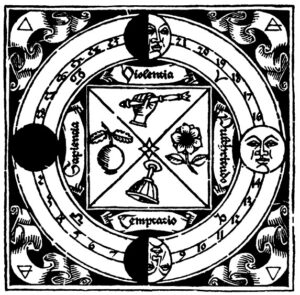
 With this post we continue our survey of the Great Wheel of the 28 lunar phases, the central symbolic mandala of Yeats’s A Vision. In last month’s episode we followed the soul through the latter part of the first quarter, ending with the shattering experience of the 8th Phase. There the soul must wrench itself free from the collective consciousness of its culture and its time, and stand wholly alone for the first time. It is wholly typical of Yeats’s system that this is not an experience of heroic triumph but one of total failure.
There’s a lesson here of considerable importance. Over the last few centuries, Western industrial society has become obsessed with narratives that imagine the individual human being as the only genuinely active force in existence, and portray everything else in the cosmos as passive material waiting for the human will to give it direction and meaning. We too often lose track of the fact that this is a half-truth at best. Sometimes each of us acts on the world, true, but sometimes the world acts on us; sometimes each of us is the blacksmith and sometimes each of us is the iron beneath the hammer. The 8th phase is the great example of the latter condition; as we will see later on, its opposing phase, the 22nd, is the great example of the former.
With the 9th Phase, however, the hammer blows have finished for the time being. The soul has definitively detached itself from the primary tincture, the mode of human existence that relates to material reality, the sensory, and the collective. Having won its freedom at the cost of failure and suffering, the soul now has to figure out what to do with it. Put in abstract terms, the answer is simple enough: it must learn to focus all its attention on the Mask, the world as it could be, and not the Body of Fate, the world as it is. That abstract answer is never enough, however. The soul needs specifics, and finding them will occupy its next six lives.
Phase 9: Belief Instead of Individuality
The first step out of the chaos of the 8th Phase, the first stage in the exploration of the strange new world of individual consciousness into which the soul has ventured, is as clumsy as any other new beginning. It is not the clumsiness of weakness, as one sees in a newborn infant. It is a clumsiness born of too much power and not enough capacity to control it. The title of the phase, “belief instead of individuality,” gives the keynote of the Will at this stage. The Will needs a belief, some more or less arbitrary set of opinions, to give form to its otherwise shapeless energies. That belief can be constructive or monumentally destructive, depending on whether the person is in or out of phase.
That depends, in turn, on the Mask. The true Mask of this phase, “Facility,” derives from Phase 23, the first of the antithetical phases on the wheel and a phase of joyous abandonment of abstract concerns and an equally delighted refocusing on the concrete realities of life. The beliefs that are central to the Will at Phase 9 must be held lightly, so that the person can respond with facility to the kaleidoscope of desires and energies to which he is always subjected. The Mask of perfect freedom and perfect responsiveness can never be achieved by the person of Phase 9, but the quest for that unattainable condition gives such a person extraordinary creative power.
If the person fails to take up the quest for the Mask and tries instead, like someone in a primary phase, to dissolve the Mask in the Body of Fate, the false Mask comes into play instead. Its title is “Obscurity.” In this condition the person of Phase 9 can never say what he desires, because he is hiding from it, and he becomes a plaything in the hands of his Body of Fate, which is “Enforced Sensuality.” Overwhelmed by passionate desires, the person becomes clumsy, brutal, and violent, terrified and enraged by anything that reminds him too closely of the true Mask that haunts him. Here, as Yeats notes, we find men who dread, despise, and persecute the women they love—and, it is only fair to say, women who do the same thing to the men they love, as well as same-sex couples caught up in the same whirlwind of misery, rage, and desire.
The true Creative Mind in this phase is “Self-Dramatization.” The process of creating a personality—the goal of this and the next few phases—begins as the person fits his sensual desires into a story, and dramatizes that story by his words and actions. That story becomes not merely a source of meaning but also a bulwark against the chaos of unchecked desires, the “Anarchy” that is the false Creative Mind of this phase. As the desires find their place in the drama spun by the individual, they take their first steps toward a unity that will eventually focus every energy of the self on the Mask.
Phase 10: The Image-Breaker
With this phase the soul moves a little closer to unity and the four faculties accordingly draw closer to the birth of personality. Here the emotions rather than the sensual passions are the raw material from which the person must shape the first rough attempts at unity, and so “Enforced Emotion” rather than “Enforced Sensuality” is his Body of Fate. His life will be passionate, turbulent, and troubled, as any life driven by strong emotions has to be, but he has the capacity to stir and perhaps to lead others, since thoughts differ wildly from person to person but emotions are common to all human beings. His task is to clear away all the cluttered images of collective desire from his inner vision (thus the title of this phase) so that there is room for one intensely personal object of desire.
In effect, he is creating a pedestal upon which an ideal will be placed, though the ideal belongs to a later phase and his adoration of it to a later phase still. For the time being, his true Mask is “Organisation,” and this is meant in a twofold sense. Inwardly, he begins the labor of organizing his desires and his feelings, while outwardly, he is all but certain to join or to create an organization of some kind with some serious purpose. Here we have the political and religious leaders who tear down or repurpose existing structures and replace them, or try to replace them, with something that comes closer to an idea still vaguely held.
In both these labors, the inward as well as the outward, failure is simply a matter of not getting to work. This is why “Inertia” is the false Mask of this phase. The true Creative Mind is “Domination through emotional construction,” for this phase is called to action and to the mastery of circumstances. The false Creative Mind, “Reformation,” mistakenly turns the creative effort inward and tries to force the emotional life to conform to some collective pattern.
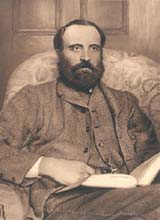
I have no idea how well Charles Stewart Parnell is remembered outside of Ireland; certainly I’d never heard of him when I first read this passage in A Vision. He was one of the central figures in Ireland’s 19th-century struggle for home rule, an extraordinarily effective parliamentary politician whose career was a roller-coaster ride of triumphs and defeats. Typically for a person of this phase, his final defeat came as a result of his own emotional life: a long and passionate relationship with another man’s wife that became public knowledge. In the time of Queen Victoria, that was more than enough to destroy his career and send him to an early grave. In his case the work of this phase was collective as well as personal: he destroyed the image of quaint little Ireland, happy under British rule, that propagandists had been pushing for centuries, and prepared a pedestal for the ideal of an independent Ireland that rose after his time.
Phase 11: The Consumer or Pyre-builder
The word “consumer” was not a bland little label for bland little people in Yeats’s time, and he meant it literally here. As Phase 9 must forge a unity out of sensual passions and Phase 10 must do the same out of the emotional life, Phase 11 is confronted with the task of doing the same from the raw material of beliefs and opinions. “Enforced Belief” is therefore his Body of Fate. The beliefs in question are not simply a framework on which personal passions can be turned into dramatic action, as in Phase 9, for the intellect is stirring; the antithetical tincture opens in this phase. Ideology takes on central importance. In earlier phases it can be no more than a collection of verbal noises used to signal this or that passion or desire or collective commitment; now ideas themselves become the focus of attention and the instruments of life and death.
A mind focused on beliefs will be a mind obsessed with moral issues. Thus the false Mask of this phase is “Moral indifference,” the acceptance of some collective belief system irrespective of its moral value, and the false Creative Mind is “Self-assertion,” the setting up of personal interests in place of moral concerns. Out of phase, a person of Phase 9 becomes a type far too familiar to all of us, for whom this or that set of beliefs functions solely as convenient camouflage for the pursuit of personal gain.
In phase, all of this is overturned. The true Mask is “Rejection,” for the person of this phase is called on to reject the traditional beliefs of his religion or culture or class in order to replace them with some other standard chosen by himself. The true Creative Mind is accordingly “Moral iconoclasm,” the shattering of some old set of moral precepts so that they can be replaced by something that, to the person of this phase, seems more nearly perfect.
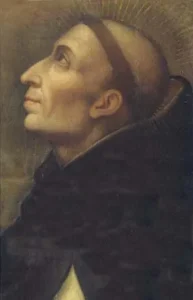
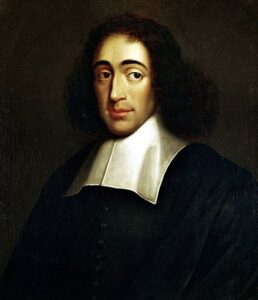
Baruch Spinoza and Girolamo Savonarola, the two figures Yeats uses as examples of the phase, were both very much in phase, and both suffered the consequences. Spinoza, a Jew, became one of the most influential philosophers of the 17th century at the cost of being expelled from the Jewish community for his heretical ideas. Savonarola, who lived in the previous century, had a more lurid fate. A wildly succesful preacher who for a while ruled the city of Florence by the sheer power of his sermons, he became too great a threat to the hierarchy of the Catholic church. He was forbidden to preach by the Pope, and when he defied the Papal edict, he was hanged, his body burnt, and the ashes dumped in the river to keep his followers from collecting relics.
Phase 12: The Forerunner
In this phase the movement from individuality to personality finds its first fulfillment. Both tinctures have opened, the primary in this phase and the antithetical in the previous phase. All four faculties are mirrored in the newborn personality, and so it becomes possible for the person of this phase to find everything in the universe outside him reflected in the newborn universe within. That inward turn becomes the dominant fact of this and the two following phases. At first, in this phase, it is fragmentary and violent, as new forces must be; later it will become all-encompassing, as the outward cosmos dissolves into that which is within.
Having disciplined passions, emotions, and beliefs in the three previous phases, the person of this phase must now carry the same process forward on the plane of the intellect; “Enforced intellectual action” is therefore his Body of Fate. In phase, this action always involves some wholly personal vision of truth, which must be taken to extremes in order to find its own definitions; thus “Self-exaggeration” is the true Mask of this phase, and “Subjective philosophy” its true Creative Mind. If the person turns instead to some vision of truth borrowed from others, becoming subservient to the primary tincture instead of following the antithetical tincture, the resulting intellectual action becomes violent but empty, a matter of bellowing arguments filling the void where the uniquely personal vision of truth ought to go. It is quite common for someone of this phase, out of phase, to lurch drunkenly between competing opinions; thus “Self-abandonment” is the false Mask of this phase and “War between two forms of expression” the false Creative Mind.
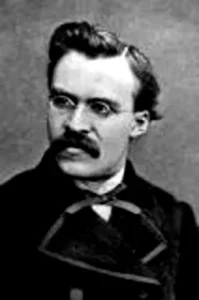
Friedrich Nietzsche is the example of this Phase Yeats gives. He was as fragmentary and violent as the phase suggests, and eventually the violence of his thought fragmented his mind and left him a catatonic mental patient. Yet his writings remain a monument of self-exaggeration in the service of subjective philosophy, as well as some of the finest German prose ever penned. In him, as in this phase generally, the creative power of the antithetical tincture rises to full flood.
Phase 13: The Sensuous Man
In this phase the inward turn continues, and for the first time unity of being becomes possible. If the person is in phase, the struggle between the contending faculties can give way at least at certain moments to perfect peace. This peace is not the product of relaxation but of tension wrought up to its maximum intensity, and therefore it can rarely be sustained for long. In those moments, however, the person can give himself over entirely to a single experience: to sensual pleasure, to creative activity, or to anything else. Having achieved unity of being, the person of this phase turns toward the world the same utter singleness of intent that the saint of Phase 27 turns toward God.
The Body of Fate in this phase is “Enforced love of another.” The Body of Fate and the Mask are moving toward one another again, lessening the conflict between them, but in people of this phase there will always be at least some conflict between that inescapable love and the call of the Mask. The true Mask of this phase is “Self-expression,” and the false Mask “Self-absorption;” creative activity of some kind is thus essential to the person of this phase if they are to avoid failure and misery.
The true Creative Mind of this phase, similarly, is “Subjective truth,” and the false Creative Mind is “Morbidity;” since our civilization is in the late primary phases, as far from this phase as it is possible to get, few people of this phase can escape at least a tinge of this morbidity in their creative efforts.
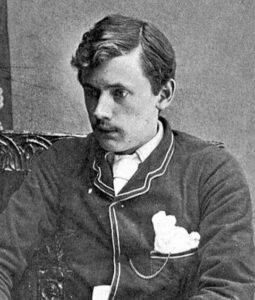
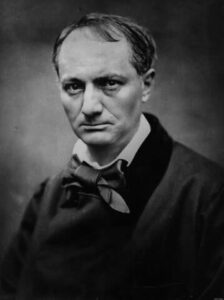
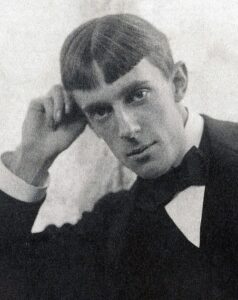
Yeats presents three examples of this phase: Charles Baudelaire, Aubrey Beardsley, and Ernest Dowson. All three were significant figures of the Decadent movement that flourished and collapsed in Yeats’s youth; Baudelaire and Dowson were poets, Beardsley the most iconic artist of the movement. All three were passionate, driven, and self-destructive, floundering constantly between true and false Mask.
Phase 14: The Obsessed Man
The last step in the long inward journey that began in the innocence of Phase Two, this phase is poised on the brink of a perfection that no embodied soul can ever achieve. The person of this phase, like that of the last, achieves unity of being, but what is a product of tremendous strain in Phase 13, nerves and muscles wrought to their highest pitch, in Phase 14 happens almost by accident. The Body of Fate, “Enforced love of the world,” almost but not quite coincides with the Mask, and so can become a source of distraction and defeat if it draws the Will away from its lonely and passionate striving toward the ideal it can almost grasp. That leads to the false Mask, “Self-distrust,” and to the false Creative Mind, “Terror.”
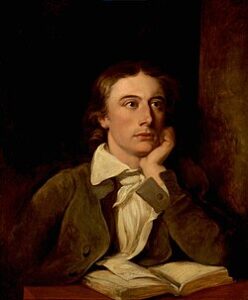
If the person can overcome the lures and distractions the world presents to him, however, the supreme achievements of art become almost easy. The true Mask is therefore “Serenity” and the true Creative Mind “Emotional will.” Poised on the brink of the disembodied Phase 15, the soul that has brought itself into phase can balance there with perfect grace. The more reflective and studied dimensions of art and literature come in later phases; here are those poets and painters for whom genius seems almost a physical accident.
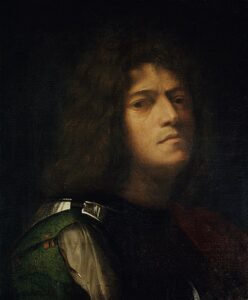
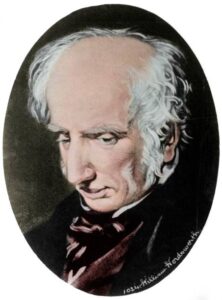
Yeats identifies the poet John Keats and the painter Giorgione as typical examples of this phase, and the poet William Wordsworth comes in for much discussion in the text, though Yeats forgot to include his name in the list at the head of the section. All three belonged to the Romantic movement, and had an extraordinarily powerful and enduring impact on the generations that followed them. In their work, the complexities of the preceding phases empty out into a perfect clarity, thought dissolves in image.
*****
The phases covered in this month’s discussion include two triads, 9-10-11 and 12-13-14, each of which functions as a wheel of phases of its own. Review them over the month to come, and see if you can identify more people belonging to each phase. Next month we’ll review the whole first half of the wheel, and discuss what can be known of the mysterious phase of the full moon, Phase 15.
Courteous, concise comments relevant to the topic of the current post are welcome, whether or not they agree with the views expressed here, and I try to respond to each comment as time permits. Long screeds proclaiming the infallibility of some ideology or other, however, will be deleted; so will repeated attempts to hammer on a point already addressed; so will comments containing profanity, abusive language, flamebaiting and the like -- I filled up my supply of Troll Bingo cards years ago and have no interest in adding any more to my collection; and so will sales spam and offers of "guest posts" pitching products. I'm quite aware that the concept of polite discourse is hopelessly dowdy and out of date, but then some people would say the same thing about the traditions this blog is meant to discuss. Thank you for reading Ecosophia! -- JMG